

Estimated Read Time: 10-12 Minutes
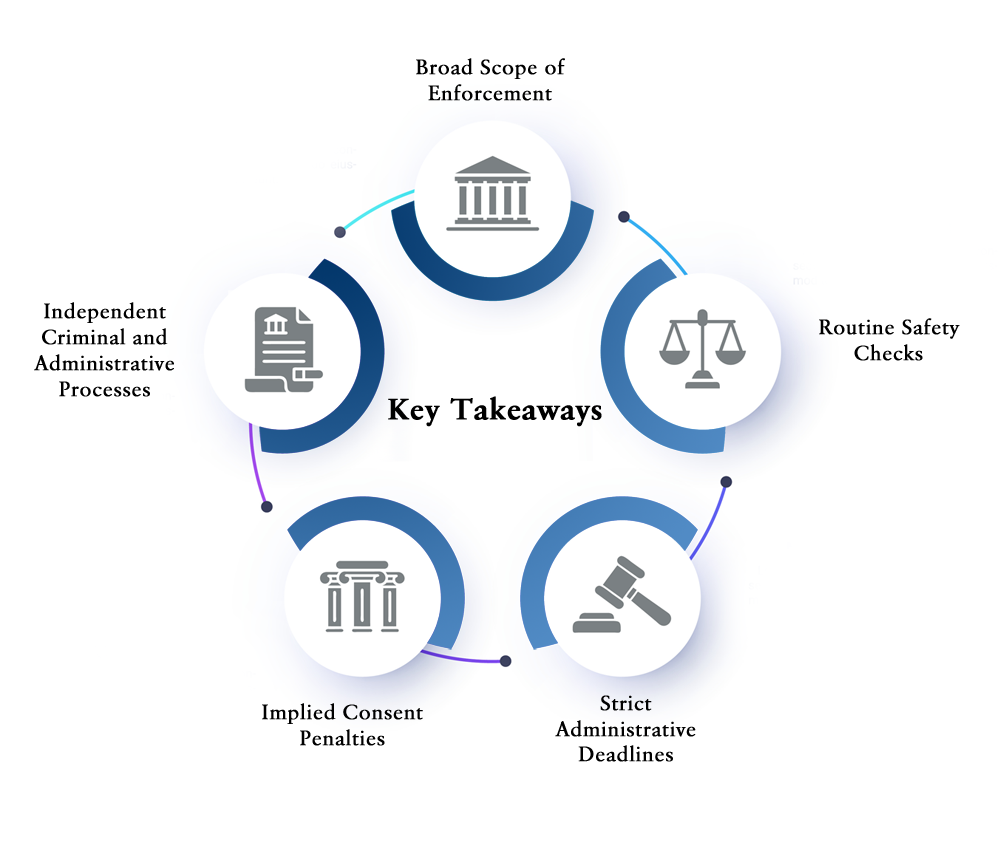
Key Takeaways
Broad Scope of Enforcement: Georgia’s BUI laws apply to nearly any floating device, including motorboats, Jet Skis, sailboats, and non-motorized vessels like kayaks and canoes.
Routine Safety Checks: DNR Rangers do not need a specific reason or probable cause to stop a boat. They are allowed to board any vessel for a routine safety check and initiate a BUI investigation if they observe signs of impairment.
Strict Administrative Deadlines: Following a BUI arrest, you have only 10 business days to file a written appeal to prevent the automatic one-year suspension of your boating privileges.
Implied Consent Penalties: By operating a vessel in Georgia waters, you have legally consented to chemical testing, and refusing these tests after an arrest results in an automatic one-year suspension of your right to boat.
Independent Criminal and Administrative Processes: The loss of boating privileges is an administrative decision that occurs independently of the criminal court case, meaning you can lose your boating rights even if your criminal charges are later reduced or dismissed.
In Georgia, Boating Under the Influence is governed primarily by the Georgia Boat Safety Act. The law is remarkably similar to DUI laws for motor vehicles, and the rules apply to almost anything that floats. You can be charged if you are steering or in control of a motorboat, a Jet Ski, or even a kayak or canoe while under the influence of alcohol or drugs. The law also covers people being towed, such as water skiers or tubers. You don’t necessarily have to be speeding or driving dangerously to get caught. If a DNR Ranger stops you for a routine safety check and they smell alcohol or notice you are acting impaired, they can start a BUI investigation.
A BUI in Georgia is almost always treated as a misdemeanor for your first, second, or third offense. This means that if you are caught boating while intoxicated, the case is handled in lower courts and usually results in fines, community service, and up to a year in county jail rather than state prison. However, even as a misdemeanor, a third conviction is considered serious and aggravated, meaning the judge is required by law to impose harsher penalties and higher fines than for a first-time offender.
The legal limit for most adults is a blood alcohol concentration of 0.08%, but the law is much stricter for others. If you are under 21, the limit is 0.02%. If you are operating a commercial vessel, it is 0.04%. However, even if you are below the legal limit, an officer can still arrest you for being less safe. This means that if your actions, such as struggling to dock, slurring your speech, or failing a sobriety test, suggest that the alcohol in your system makes you a danger to others, you can still face the exact criminal charges as someone who blew over the limit.
You can also get a BUI by refusing a breath or blood test. When you operate a boat in Georgia, the law says you have already given implied consent to be tested if an officer suspects you are impaired while operating a boat on public waterways. If you refuse the test, the state will automatically take away your right to operate a vessel for one year. It is important to know that you can be charged even if you aren’t the one drinking. If you are the owner of the boat and knowingly let an intoxicated friend take the wheel, you can also be held legally responsible.
It is helpful to know that while a misdemeanor BUI is a serious offense, it usually only suspends your right to operate a boat, not your regular driver’s license. This is a big difference from a DUI on the road, where you lose your car license almost immediately.
The Difference Between Anchored and in Motion
Think of your boat like a house when the anchor is down, but like a car the second the anchor is up. Georgia’s BUI laws specifically apply to anyone who is steering, driving, or in actual physical control of a moving vessel. If your boat is securely anchored, tied to a dock, or sitting on the sand, it is generally not considered a moving vessel, which means you can legally drink alcohol and even be over the legal limit without breaking BUI laws. However, as soon as that boat is adrift, meaning it is floating with the wind or the current. The law considers it a moving vessel. This means you can be arrested for BUI even if your engine is completely turned off, because the boat is still in motion on the water and someone needs to be sober to manage it. Whether or not you will be charged with a crime will often depend on whether you are in actual physical control of the boat. For example, if you are sitting in the captain’s chair with the keys in the ignition or the engine idling, a ranger can argue you are in control of the boat even if you aren’t currently moving. If you have been drinking while anchored and your blood alcohol level is 0.08% or higher, the second you begin to drift or drive away, you are in violation of the law.
Finally, it is essential to remember that these rules apply to almost anything on the water, including Jet Skis, sailboats, and even people being towed on water skis or tubes. Since the law has a strong interest in preventing accidents, the definition of moving is very comprehensive. If your boat is not physically attached to the earth or a dock, it is likely considered moving in the eyes of the law. This is why the person who plans to drive the boat back to the ramp must stay sober the entire time the boat is drifting or being driven, and they should assume their duties as the operator only when they are sure they can safely handle the vessel.
Legal Limits and Standards of Intoxication
The rules for how much you can drink before it becomes a BUI are very similar to the rules for driving a car, and they focus on two main things: your blood alcohol level and your actual behavior. For most adults, the important number is 0.08%. If a breath or blood test shows you are at or above this limit, you are automatically considered to be breaking the law, regardless of how well you think you are handling the boat. However, the state is much stricter with younger boaters; if you are under 21, the legal limit is just 0.02%, which is basically a zero-tolerance policy meant to stop any underage drinking on the water.
Even if you are below the 0.08% limit, you can still be arrested under the less-safe standard. This means that if a DNR Ranger watches you struggle to park at a dock, weave through other boats, or act noticeably impaired, they can charge you with a BUI because the alcohol in your system has made you a danger to others. In court, if you blow a 0.05% or less, the law generally assumes you were sober enough to operate. But if you are anywhere between 0.05% and 0.08%, the judge will look at your behavior and physical state to decide if you were too intoxicated to be in control of the vessel.
The laws aren’t just for alcohol. Drugs and even some household vapors are also included. It is illegal to have any amount of an illicit drug like marijuana in your system while operating a boat. If you are taking prescription medication, you are allowed to have it in your system, but only if it doesn’t make you less safe to drive. If anything you have consumed interferes with your ability to navigate safely and protect your passengers, you are considered intoxicated under the law.
Implied Consent
By operating a vessel on Georgia waters, you have already given implied consent to chemical testing on your blood, breath, or urine if arrested for BUI.
Think of implied consent as a legal trade-off. In exchange for the privilege of using the state’s lakes and rivers, you have already agreed to take a breath or blood test if a ranger suspects you are boating while intoxicated. A DNR Ranger who has a good reason to believe you are impaired must read you a specific legal notice, usually from a green card, immediately after arresting you. This notice warns you that if you say no to the state’s test, you will automatically lose your right to operate any boat or personal watercraft in Georgia for a full year. Unlike a car DUI, there is usually no hardship license that lets you get back on the water early. If you refuse, that one-year ban is very difficult to avoid.
If you decide to take the state’s test, the law also gives you a special right in return. In addition to the state’s test, you can request a second, independent test from a doctor or hospital of your own choosing. While the law grants you this opportunity, it will not pay for it. The officer is even required to help you get to a place where you can have that second test done. It is also important to know that you have a very short time to fight back if the state tries to take your boating privileges away. You have 10 business days after your arrest to send a formal letter to the Department of Natural Resources to request a hearing. If you miss this tiny window, the one-year suspension happens automatically, even if you eventually win your case in criminal court.
Because this law is so strict, the exact words the officer reads to you matter immensely. If they skip the notice or read the version meant for car drivers instead of boaters, a lawyer can often get the test results thrown out of your case. Essentially, the “implied consent” rule is designed to make it very difficult for someone to refuse a chemical test without facing a significant, immediate penalty that affects their ability to enjoy Georgia’s waterways.
Consequences of Refusing Testing
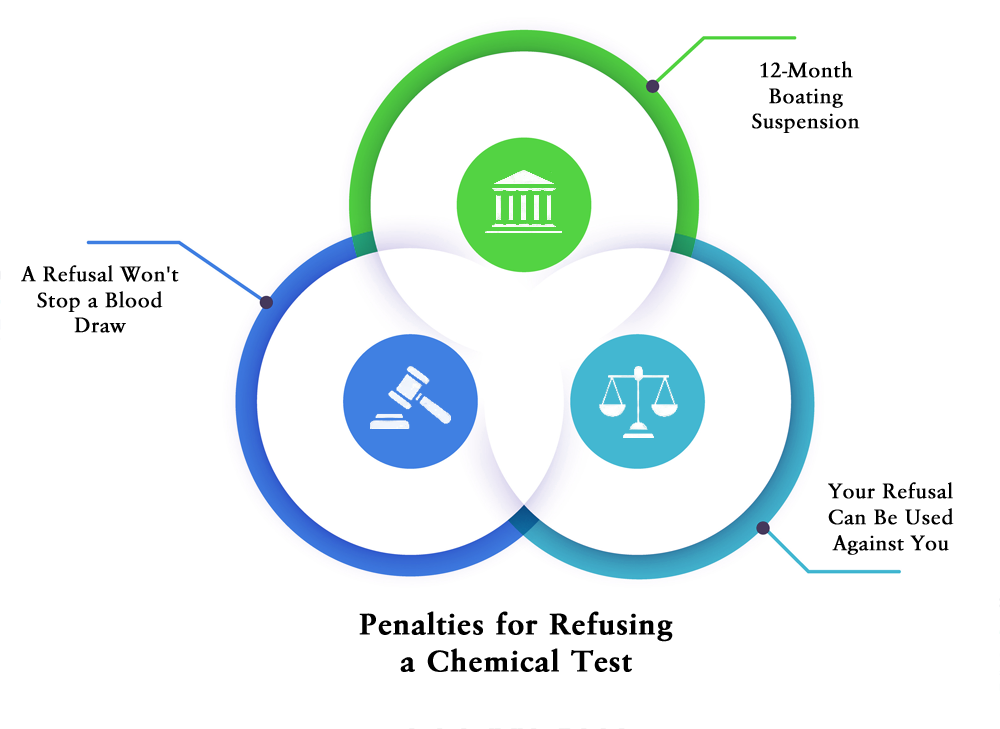
If you refuse to take a breath, blood, or urine test after a BUI arrest in Georgia, there will be two consequences right out of the gate. If you refuse a test, you will trigger a 12-month suspension of your boating rights to operate any vessel in any state. Unlike a DUI from driving a car, there are no special permits that you can get that will allow you to boat for work or other reasons. You will be banned from operating a boat for a full year.
You only have 10 business days to mail an appeal to the Department of Natural Resources (DNR) to put a stop to that suspension. If you miss the deadline, you will lose your boating rights even if you are later found not guilty of the BUI charge.
Additionally, your refusal can be used as evidence against you during your trial. The prosecution can tell the jury that you refused the test, arguing that you did so only because you knew you were over the legal limit. This is often called consciousness of guilt.
A refusal is not a guarantee that the police won’t get a sample. If an officer is granted a search warrant by a judge, they can legally compel a blood draw. This can be a worst-case scenario in which you lose your boating rights for a year for refusing the initial request, and the prosecution still manages to obtain the scientific evidence needed to convict you.
It is important to understand that your boating license and its recovery are handled administratively, whereas the jail and fines are handled legally. Even if a lawyer helps you get your criminal charges reduced or dismissed later on, the one-year ban for refusing the test usually stays on your record. This makes the decision to refuse a very high-stakes choice, as the GDNR tracks these refusals to identify repeat offenders.
10-Day Rule
The 10-Day Rule is a strict deadline that determines whether you can keep your right to operate a boat after a BUI arrest. If you are arrested for boating under the influence and either refuse a sobriety test or fail one by blowing over the legal limit, you have only 10 business days from the date of that arrest to file a formal, written appeal with the GDNR. If you do not send this letter within that short window, your privilege to operate any boat, Jet Ski, or personal watercraft in Georgia is automatically suspended for 12 months. Even if a judge eventually finds you not guilty of the BUI later on, you will still be banned from the water for the full year if you missed that 10-day deadline.
The purpose of sending this letter is to request a special hearing which stops the suspension from starting right away and gives you a chance to defend your rights. At this hearing, an administrative law judge will review specific legal questions, such as whether the officer had a good reason to stop your boat, if the arrest was handled legally, and if the officer correctly read you the implied consent notice before asking for a test.
To file the appeal correctly, you must put it in writing and include your name, address, birth date, the date of the arrest, and the county where it happened. It is highly recommended to send this by certified mail with a return receipt in case you need to prove that GDNR received it on time.
While you might be able to get a limited permit to drive a car after a DUI, once your boating privileges are suspended under the 10-day rule, there is generally no way to get back on the water until the whole year is up.
Standardized Field Sobriety Tests in a Marine Environment
Sobriety tests on the water are handled differently than they are on the road. Since being on a boat for a few hours can make anyone feel off-kilter, GDNR uses specific seated tests instead of tasks like walking a straight line or balancing on one leg. These tests are conducted while you stay seated, and can include an officer watching your eyes follow a pen, asking you to touch your nose with your eyes closed, or performing specific hand-clapping and counting games. These are designed to observe your coordination, reaction time, and ability to follow instructions and process information. GDNR officers are usually trained to wait at least 15 minutes after you have stopped moving before judging your performance to give your body a moment to adjust to being still.
It is critical to know that you are not required to do physical field sobriety tests, and refusing them won’t cost you your boating privileges. However, the rules change once you are under arrest and the officer asks for a chemical test of your breath, blood, or urine. Under the implied consent law, the state operates under the assumption that since you are choosing to drive a boat on Georgia waters, you have agreed in advance to submit to testing if an officer determines there is a good reason to test you.
If the officer decides that you failed these seated tests and arrests you for BUI, they will then read you the implied consent notice. At that point, the testing is no longer just about your physical coordination, but becomes a legal requirement to take a formal chemical test. Think of the seated sobriety tests as a way for the officer to gather evidence to see if you are impaired before they move on to the more serious chemical testing.
While you can politely decline to do the hand coordination or eye tests without automatically losing your license, the officer can still use other clues, such as the smell of alcohol or slurred speech, as a reason to arrest you.
Penalties for a First Offense
A first-offense BUI in Georgia is a misdemeanor that can carry jail time, fines, and mandatory classes. You could be sentenced to anywhere from 10 days to a full year in jail, though a judge might let you serve that time on probation instead. However, if your blood alcohol level was 0.08% or higher, the law often initiates a mandatory minimum, meaning you must spend at least 24 hours in jail with no exceptions. In addition to jail time, you will likely be required to pay a fine ranging from $300.00 to $1,000.00. However, once you add in the additional court costs and state surcharges, the total bill often ends up being twice that amount.
Beyond the fines and jail, you will usually have to perform at least 40 hours of community service and finish a state-approved DUI or BUI Risk Reduction class. You might even be ordered to undergo a clinical evaluation to see if you have an alcohol or drug problem, and you might have to complete a treatment program if the evaluator thinks it is necessary. While this conviction generally does not take away your regular driver’s license for a car, it does suspend your right to drive any boat or Jet Ski until you finish your classes and pay a fee to get your boating privileges back.
These penalties can multiply very quickly if you have passengers. If there are children under the age of 14 on the boat when you are caught, you might be charged with a separate crime of child endangerment for every single child on board. This means a first-time BUI can result in multiple criminal charges, leading to much higher fines and longer jail time. Additionally, if you refused to take the breath or blood test when the officer asked, you will still face a separate one-year ban from the water, regardless of what happens with these other criminal penalties.
Financial Consequences for a First Offense
The cost of a first-time BUI in Georgia is much higher than the initial fine because of a variety of hidden taxes and extra fees. While the base fine is usually between $300.00 and $1,000.00, Georgia can add several mandatory surcharges, including fees to support health initiatives or victim assistance funds. This means a $500.00 fine can easily become $750.00 or more once you actually go to the clerk’s office to pay it. On top of that, if you are sentenced to probation, you will typically be responsible for paying the monthly fees, which usually cost between $30.00 and $50.00 every month for a year. Depending on how you were arrested, you might also have to factor in the cost of having your boat towed and stored, which can quickly run into several hundred dollars, depending on how long it sits in the impound lot.
Beyond the court fees, you might have to pay for several mandatory programs as part of your sentence. A state-mandated risk reduction or DUI school can cost $360.00, as well as $95.00 to $100.00 for a professional drug and alcohol evaluation. If the evaluation says you need more treatment, you’ll have to pay for those extra classes as well.
Once you’ve finished all your court requirements, the GDNR will charge you a reinstatement fee of about $210.00 just to reinstate your legal right to drive a boat. When you add all of these pieces together, a single BUI conviction in Georgia can easily end up costing you between $2,000.00 and $3,500.00 in total.
FAQs
Can I be charged with a BUI if my boat is not moving? If your boat is adrift with the engine off, you can still be arrested because the law considers it a moving vessel unless it is securely anchored, tied to a dock, or on land.
Does a BUI conviction affect my regular driver’s license? A BUI conviction typically only suspends your right to operate a boat and does not result in the suspension of your motor vehicle driver’s license.
What is the 10-Day Rule for BUI arrests? You have only 10 business days from the date of your arrest to file a written appeal with the GDNR to prevent the automatic one-year suspension of your boating privileges.
Is it illegal to have an open container of alcohol on a boat? No, Georgia does not have an open container law for boats, so both operators and passengers can legally hold open drinks in their hands.
What are the penalties for having children on board during a BUI? If a passenger is under 14, you will face a separate child endangerment charge for every child on board, which adds more jail time and higher fines to your case.
Penalties for a Second and Third Offense
A second BUI conviction in Georgia within 10 years is a much more serious situation that severely limits the judge’s ability to be lenient with your sentence. You are typically required to spend at least 72 hours in jail with no exceptions, though the judge can sentence you to as much as a full year behind bars. Your fines will also increase, starting at $600.00 and going up to $1,000.00. Keep in mind that state taxes and court fees will likely double that total cost. Your community service mandate will also increase to at least 30 full days.
The law treats a second offense as a sign of a deeper problem. As a result, you will probably be sentenced to a mandatory drug and alcohol evaluation and any treatment or counseling the evaluator recommends. While you still won’t lose your car driver’s license, your right to drive any boat or Jet Ski will be suspended for up to three years, and you’ll have to finish your treatment and pay a reinstatement fee to the GDNR to ever get those rights back.
If this second arrest happened within five years of your first one, the state adds a public shaming penalty where they publish your mugshot, name, and address in the local newspaper at your own expense.
Additionally, as with a first offense, if there were children under 14 on the boat, you will face a separate child endangerment charge for each child, which can lead to even more jail time and higher fines. You might also be placed on 12 months of probation and have to pay monthly fees to a probation officer.
Penalties for a Fourth Offense
A fourth BUI conviction in Georgia within ten years is a felony. With this charge, you might face a prison sentence of 1 to 5 years, and the law dictates that at least 90 days of that sentence must be served in jail, even if the rest is served on probation.
Your fines will increase dramatically, ranging from $1,000.00 to $5,000.00, and once you add in the required state taxes and court surcharges, the total cost can easily reach $7,500.00 or more. You can receive a five-year probation sentence in addition to a 60-day community service requirement. You will likely be required to complete the state-mandated risk reduction school and any alcohol or drug treatment recommended by a professional clinical evaluator, often involving months of counseling.
A felony conviction will change your life. You will face the loss of your civil rights, including the right to vote and the right to own or possess a firearm. A felony record can also make it extremely difficult to find a job, qualify for professional licenses, or even rent an apartment. You might even be declared a habitual violator on your boating record, which results in a long-term or even permanent ban from operating any vessel on Georgia’s waters.
Just like previous offenses, if there were children under 14 on board, you would face additional child endangerment charges for each one. Since you are already in felony territory, these can lead to even more prison time. You will also have your mugshot and address published in the local newspaper at your own expense, and the court may even order you to surrender the license plates for any vehicles you own. Because a fourth offense is a felony, your case will be handled in Superior Court rather than a local municipal court, making the entire legal process much more complex and the stakes much higher.
Securing Your Boat After Arrest
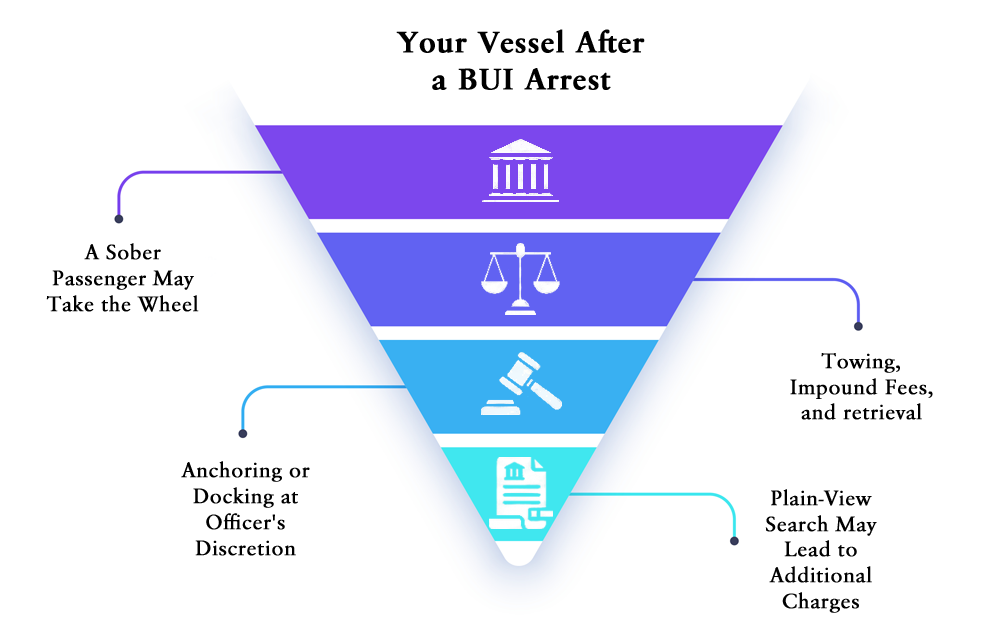
When an operator is arrested for BUI, the GDNR Ranger or local law enforcement officer must follow specific protocols to ensure the vessel is secured. The officer’s primary responsibility is the safety of the passengers and the vessel itself. Typically, if there is a sober and capable passenger on board, the officer may allow that person to take over and drive the boat home. However, if everyone on board is intoxicated or if there are no other passengers, the officer will usually arrange for the boat to be towed to a local marina or a secure impound lot. You will be responsible for the towing costs and any daily storage fees, which can add up quickly.
In some cases, if the boat is in a safe location that does not block traffic or pose an environmental hazard, the officer might allow you to anchor it or tie it to a nearby dock, but this is entirely at the officer’s discretion. If the vessel is seized as evidence, which usually occurs only in felony cases involving serious injury or death, it may be held for an extended period for investigation. For a standard misdemeanor BUI, the boat is usually treated like an impounded car, and you or someone you authorize can pick it up once the towing company’s fees are paid. However, you cannot personally drive it until you are sober and released from custody.
It is also important to note that while the boat is being secured, rangers may conduct a plain-view search or a safety equipment check. This means that if they see illegal drugs, open bottles of liquor in the operator’s area, or a lack of life jackets while they are preparing the boat for towing, you could face additional charges on top of the BUI.
No Reasonable Suspicion Needed
Georgia law grants GDNR Rangers and other marine officers a special authority that police do not have on the road. Unlike with a car, the GDNR can pull your boat over for a safety check even if you are doing everything perfectly. Officers have the legal right to stop and board any vessel to check for required safety items, such as life jackets, fire extinguishers, and up-to-date registration. This is a significant difference from driving a car, where a police officer generally needs reasonable suspicion before pulling you over.
While the officer doesn’t need a reason to start the stop, the safety check is often how a BUI investigation begins. Once the ranger is on your boat to check your life jackets, they are trained to look for clues that you might be intoxicated, such as the smell of alcohol, slurred speech, or empty containers in plain view. If they notice these signs during their routine inspection, they then have the grounds they need to shift the interaction into a full BUI investigation. This means they can ask you to perform a seated sobriety test.
It is also important to remember that you are legally required to stop immediately and allow the officer to board when they hail you. Failing to stop or resisting a ranger’s attempt to board for an inspection is a crime in itself. This creates a situation where you must comply with the initial stop, which then gives the officer the perfect opportunity to look for evidence of impairment.
Open Containers
Georgia does not have an open container law for boats as it does for cars, meaning it is perfectly legal for both the passengers and the person driving the boat to have an open beer or a mixed drink in their hand. Because there is no specific open container ticket for a boat, you won’t get in trouble just for having alcohol in plain sight during a routine safety check. This is a major difference from Georgia’s motor vehicle law.
However, even though having the drink is legal, it often acts as the trigger for a BUI investigation. Since DNR Rangers can board your boat for a safety check without cause, seeing an open beer or smelling alcohol gives them grounds to start a full sobriety investigation. If you are eventually arrested for BUI, the prosecutor will use those open containers as evidence to argue that you were drinking while driving and were therefore less safe to operate the boat. So, while you aren’t breaking an open container law, having alcohol out in the open makes it much more likely that a simple 5-minute life jacket check will turn into a trip to jail.
While the rules for passengers are also more relaxed on a boat, it is important to remember that if there are minors under 21 on board, the presence of open alcohol can lead to other serious charges like minor in possession or providing alcohol to minors. For the operator, a first-offense BUI conviction where they were actively drinking may also end in a harsher sentence compared to someone who had drinks earlier in the day.
Felony Upgrades
A first-offense BUI is usually handled as a misdemeanor, but it can be upgraded to a serious felony if your actions cause someone else to be badly hurt or killed. If you are operating a boat under the influence and cause an accident that results in a serious injury, such as losing a limb, losing the use of a body part, permanent scarring, or brain damage, you are facing a prison sentence of 1 to 15 years. If the accident is even more tragic and someone dies because of your impaired driving, it is charged as first-degree homicide by vessel. This is a severe felony that can carry a mandatory prison sentence of at least 3 years and up to 15 years, even if you have a perfectly clean record before the accident.
Another way a first-time offense can become a felony is if you try to run from the law. If a DNR Ranger signals for you to stop and you intentionally try to outrun them or escape in a way that endangers the public or the officers, you can be charged with a felony for fleeing and eluding.
It is also important to note that while having children under 14 on the boat triggers separate child endangerment charges, those specific charges actually stay as misdemeanors for your first and second convictions, but will turn into a felony on the third time you are caught with kids on your boat. However, because each child on board counts as a brand-new crime, the total amount of jail time and fines from these stacked misdemeanors can quickly add up to look and feel like a felony punishment.
Defending Yourself Against a BUI Charge
A criminal defense attorney will typically challenge a first-time BUI by looking for mistakes made by the rangers or by proving that the environment of the water made you look intoxicated when you actually weren’t.
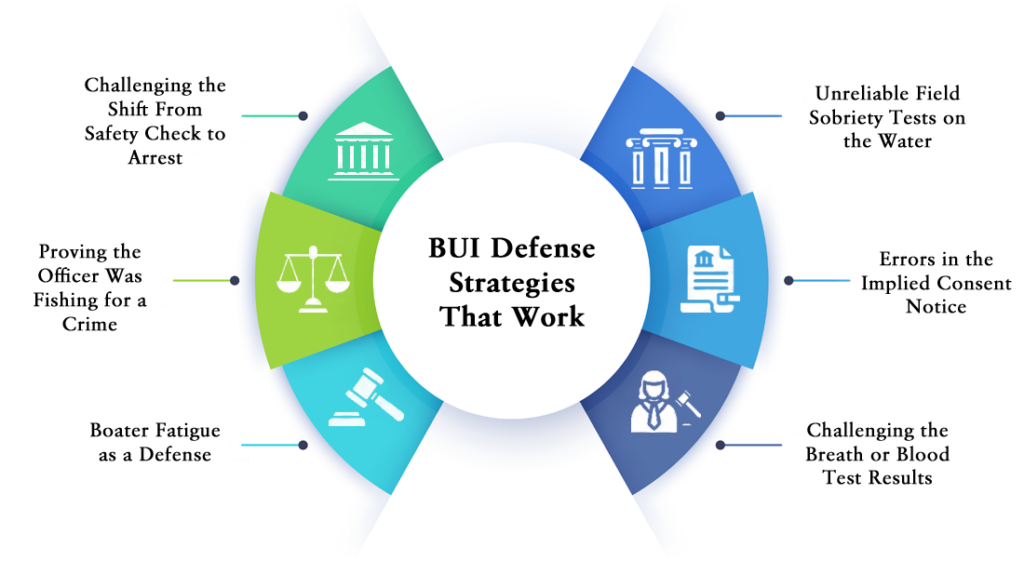
Since rangers can pull you over for a safety check without any reason, your attorney will first scrutinize the exact moment that a life jacket check turned into a criminal investigation. They will argue that the officer didn’t have enough probable cause to justify moving from a simple inspection to a full arrest. If the lawyer can show that the ranger was fishing for a crime without any objective evidence, they can ask the judge to throw out all the evidence the officer gathered after that point.
Another major part of the defense involves questioning the results of the seated field sobriety test. Your attorney might use a defense focused on boater fatigue, arguing that spending all day in the hot sun, wind, and on a vibrating boat causes exhaustion that mimics the signs of impairment, such as bloodshot eyes, swaying, or slow reactions. They will also argue that these tests are scientifically unreliable if the water was choppy or if other boats were creating wakes while you were being tested. By cross-examining the officer about their training, a lawyer can often show that the officer didn’t follow the strict guidelines for these tests, making the results appear more like a guess than a scientific fact.
Finally, your attorney will look for technical errors in the chemical breath or blood tests. Under Georgia’s implied consent law, the officer is required to read you a specific legal notice at the time of your arrest. If they misread it, waited too long, or used the wrong version, the judge may refuse to let the jury see your test results. They might also check to see if the officer watched you for a full 20 minutes before the breath test to make sure you didn’t burp or vomit, which can ruin the machine’s reading. By combining these scientific, technical, and environmental arguments, a defense lawyer tries to create reasonable doubt in the minds of the jury, which is often enough to get the charges reduced to a lesser offense or dismissed entirely.
A Simple Process to Getting Started

Schedule a Free Case Evaluation
Schedule a free, no-obligation, and confidential case consultation in person, online, or over the phone. This will help you understand how your case can be challenged, potentially leading to a reduction, dismissal, or acquittal of your charges. Click here to schedule your case evaluation.

Meet Our Defense Team and Conduct a Case Evaluation
During your free case evaluation, you’ll have the opportunity to ask questions, receive answers and legal guidance, and collaborate with our attorneys to better understand your side of the story, gather evidence, and devise a strategy to achieve the best possible outcome for your pending criminal charges.

Start Defending Your Case
After your free case evaluation, Zeliff & Watson will assist in preserving evidence and safeguarding your rights, ensuring your protection throughout the process. The defense team will also provide a proposed fee to represent your case, with the goal of achieving the best possible outcome.