

Estimated Read Time: 13-14 minutes
Facing a second DUI charge in Georgia can feel like an uphill battle, but it is important to remember that you have a voice, a defense, and a clear path forward. The law is not just a set of penalties. Think of it as a framework of strict rules that the state must follow perfectly, and any slip-up on their part is an opportunity for your defense. By taking a proactive approach, engaging in early intervention, understanding your constitutional rights, and meticulously deconstructing the prosecution’s evidence, you are not just managing a situation, but actively fighting for your future. This process is about reclaiming your narrative, protecting your livelihood, and ensuring that your rights are upheld with the highest level of integrity and resolve.
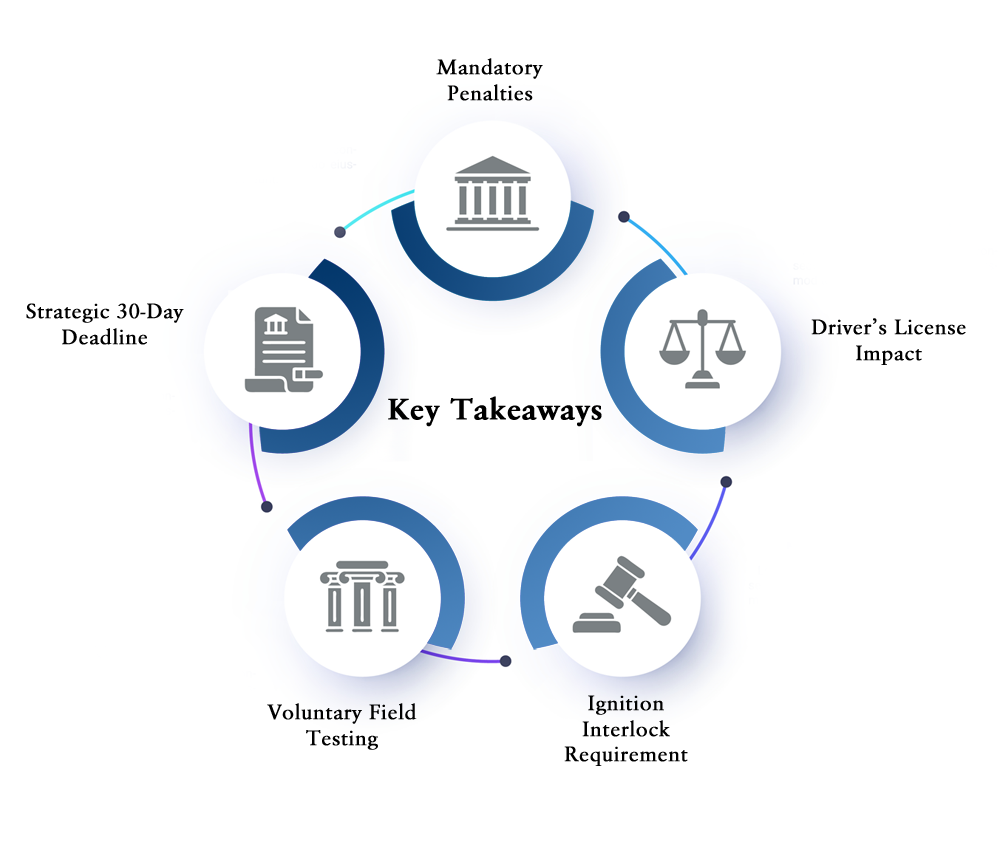
Key Takeaways
Mandatory Penalties: A second conviction within 10 years can require a minimum of 72 hours in jail, but there are alternative sentencing options depending on the circumstances of your arrest.
Driver’s License Impact: If the second arrest occurs within five years of the first, you face a three-year license suspension, including a 120-day hard suspension with no driving allowed at all.
Ignition Interlock Requirement: Following the initial suspension, you may be eligible for a limited permit only if you install an ignition interlock device for at least 12 months and enroll in a substance abuse treatment program.
Voluntary Field Testing: Roadside physical exercises are voluntary in Georgia, and refusing them prevents the creation of video evidence that a prosecutor could use to show impairment.
Strategic 30-Day Deadline: You must act within 30 days of your arrest to request an administrative hearing. Otherwise, your driver’s license will be suspended automatically by law.
Second DUI Offense in Georgia
While a second DUI conviction is a serious misdemeanor that carries tough penalties, it is also a path with defined steps to move forward. These consequences are divided into two categories: what the criminal court requires and what the Department of Driver Services will do to your license. If your second arrest happens within ten years of your first, you are facing a mandatory minimum of 72 hours in jail, though a judge can sentence you to up to one year. You will also have to pay a fine between $600.00 and $1,000.00, plus court fees. You will also likely need to perform 240 hours of community service and remain on probation for a full year. Additionally, you will typically be required to attend DUI school and undergo a clinical evaluation to see if you would benefit from substance abuse treatment.
The rules for your driver’s license are stricter if your second DUI happens within five years of the first. In this case, your license will be suspended for three years. For the first 120 days, you can experience a hard suspension, meaning you will not be allowed to drive at all, not even to work or school. After that period, you may be eligible for a limited permit, but only if you install an ignition interlock device, which is a small breath test connected to your car’s starter, for at least 12 months. Other unique penalties for a second offense include having your photo and conviction published in the local newspaper at your own expense and having to surrender the license plates for every vehicle you own.
Two Ways Someone Can Be Charged with DUI in Georgia – DUI Per Se and DUI Less Safe
In Georgia, there are two main ways the state can charge you with a second DUI: DUI per se and DUI less safe. While both lead to the same harsh penalties for a second offense, including the mandatory 72 hours in jail and 240 hours of community service, they differ in how the prosecutor tries to prove your guilt in court.
DUI Per Se is a charge based entirely on a number. If you take a state-administered breath or blood test and the result is 0.08% or higher, you have committed a per se violation. In simple terms, the law says that hitting that number is a crime by itself. The prosecutor does not have to prove that you were swerving, slurring your speech, or acting drunk. They only have to prove that the test was accurate and that your alcohol level was over the legal limit. Think of it as the mathematical way of proving a DUI.
DUI less safe is a broader charge that doesn’t require a high test result. The state uses this when a driver refuses to take the breath test or when their test result is actually below 0.08%, but the officer still believes they are too impaired to drive. To win a less safe case, the prosecutor relies on the officer’s observations, such as poor performance on field sobriety tests, bloodshot eyes, or unsafe driving maneuvers. Essentially, they are arguing that consuming alcohol made you a less safe driver than you would have been sober, regardless of what a machine might say.
Actual Physical Control
The term actual physical control is an important one in the DUI landscape. If you are in actual physical control of a vehicle, it means that you can be convicted of a DUI even if the police never saw your car moving. Under the state’s DUI law, it is illegal to drive or be in actual physical control of a vehicle while impaired. This means that if you have the immediate ability to operate the car, such as sitting in the driver’s seat with the keys in your pocket, in the ignition, or on the seat next to you, the law considers you to be driving for the purposes of a DUI charge. This is sometimes referred to as a parked-car DUI, and for a second offense, it carries the same mandatory minimum penalties as if you were caught speeding on the highway, including the required 72 hours in jail and 240 hours of community service.
Courts determine whether you had actual physical control by looking at the specific details of your situation. For example, if you are found asleep in the driver’s seat with the engine running to keep the heater on, a judge or jury can decide you were in control of the vehicle. Even if the engine is off, factors like where you were sitting, where the keys were located, and whether the hood of the car was still warm can be used as evidence to prove you were in control. For someone facing a second DUI, this concept is particularly dangerous because even a well-intentioned decision to sleep it off in the car instead of driving home can still lead to a conviction and the resulting three-year license suspension.
Field Sobriety Tests
Field Sobriety Tests are the physical exercises an officer asks you to perform on the side of the road to see if you are too impaired to drive. These tests are especially important during a second DUI stop because the officer uses them to gather clues of impairment to justify an arrest. There are three standard tests: the horizontal gaze nystagmus, where the officer watches for your eyes to jerk while following a pen; the walk and turn, where you must walk heel-to-toe in a straight line, and the one-leg stand, where you balance on one foot while counting. These are designed as tasks to divide your attention and test your ability to follow instructions while using your motor skills. If the officer sees enough mistakes, they will use that evidence to charge you.
It is helpful to understand that in Georgia, these roadside physical tests are actually voluntary. You are not legally required to perform the walk-and-turn or eye test, and you can politely decline them. However, if you do perform them, the officer’s body camera will record every stumble or missed step, which a prosecutor will then use in court to try to secure a conviction. For a second offense, where the stakes include a mandatory three-year license suspension and at least 72 hours in jail, the results of these tests often serve as critical evidence for the prosecution. If you refuse the tests, the officer can still arrest you based on other signs like the smell of alcohol or slurred speech, but they won’t have the failed physical tests to show a jury.
Refusing Field Sobriety Tests
While refusing to perform field sobriety tests during a second DUI stop is a legal right, it carries specific strategic consequences. It is important to distinguish between the physical roadside tests, such as walking a line, and the state-administered chemical tests on your breath, blood, or urine at the station.
Under Georgia law, roadside field sobriety tests, such as the one-leg stand, walk-and-turn, and horizontal gaze nystagmus, are considered voluntary. Because these tests are physical acts that can be used to incriminate you, the Georgia Supreme Court has ruled that you cannot be forced to perform them. If you refuse, the officer cannot physically compel you to do them, and they cannot magically fail you on a test you didn’t take. For a second DUI offense, where the prosecution is looking for any evidence to trigger a mandatory 72-hour jail sentence and a three-year license suspension, refusing these tests prevents the creation of video evidence that might show you stumbling or appearing impaired to a jury.
However, a refusal does not mean you will be released. An officer can still arrest you for DUI less safe based on other observations, such as the smell of alcohol, slurred speech, or erratic driving. Furthermore, while you have the right to refuse, the prosecution is generally allowed to tell the jury that you refused the tests. They will often argue that you declined the tests because you knew you were intoxicated and would fail them.
It is also critical to remember that refusing the roadside tests is very different from refusing the station breath test. Refusing the station test after being read the implied consent notice can lead to an automatic, one-year hard suspension of your driver’s license with no permit allowed, especially on a second offense.
Refusing a Breath Test
Refusing a breath test at the police station during a second DUI stop triggers the implied consent law. This law says that if you drive on Georgia roads, you have already agreed to take a chemical test if you are arrested for DUI. If you refuse the test on a second offense, you face a hard suspension of your driver’s license for one full year. Unlike a first offense, you generally cannot get a limited permit to drive to work or school during this year. Instead, you simply cannot drive at all. You only have 30 days from the date of your arrest to appeal this suspension, or it becomes automatic.
Even though refusing the test means the police don’t have a specific alcohol number to use against you, the refusal itself can be used as evidence in your criminal trial. The prosecutor can tell the jury that you refused the test, arguing that you only did so because you knew you were drunk. Furthermore, a refusal doesn’t always prevent the police from obtaining your results. In many cases, especially with a second offense, the officer will simply call a judge to obtain a search warrant. Once they have a warrant, they can legally take your blood by force at a hospital or jail, meaning you could end up with both a one-year license suspension for refusing and a high blood-alcohol reading used against you in court.
Lookback Period
The lookback period is a specific timeframe used by courts and the Department of Driver Services to determine how a prior DUI conviction affects the penalties for a new arrest. For a second DUI offense, Georgia actually uses two different lookback periods, five years and ten years, depending on whether the state is looking at your criminal sentence or your driving privileges.
The 10-year lookback period is used for criminal sentencing. When you are in court, the judge looks back 10 years from the date of your current arrest to the date of any previous DUI arrests that resulted in a conviction. If you have one prior conviction in that decade, you are sentenced as a second-time offender. This triggers the mandatory minimums you must serve, which typically include at least 72 hours in jail, 240 hours of community service, and a fine of up to $1,000.00. It will not matter if your previous DUI was in another state. In this circumstance, Georgia typically counts any similar conviction from across the country toward this 10-year criminal lookback.
The 5-year lookback period is used by the DDS to determine what happens to your driver’s license. This period is measured from the date of the previous arrest to the date of the current arrest. If your second DUI occurs within five years of the first, the license penalties are more severe: you face a three-year suspension, a hard period of 120 days with no driving allowed, and the requirement to install an ignition interlock device. If your second DUI happens more than five years after the first, but still within ten years, you are a second offender for jail time purposes, but the DDS may treat you as a first offender regarding your license, often allowing you to get a limited driving permit immediately.
The 30-Day Window
The 30-day window is a strict deadline you have to prevent the automatic administrative suspension of your driver’s license following a DUI arrest. This window is entirely separate from your criminal court dates and is managed by the Georgia Department of Driver Services. When you are arrested for a second DUI, the officer typically serves you with a form called a DS-1205. This form acts as your temporary driving permit for 30 days, but it also serves as a formal notice that the state intends to suspend your license. To stop this suspension from taking effect on the 31st day, you must act within this 30-day window by either requesting an administrative license suspension hearing or, in some cases, applying for an ignition interlock permit.
For a second DUI offense within five years, the stakes during this 30-day window are incredibly high. If you do not file a formal appeal, which requires a $150.00 filing fee, your license will be suspended automatically by operation of law. If you refused the state-administered breath or blood test, this results in a one-year suspension with no permit allowed. If you did take the test and the results were over the limit, the suspension period and permit eligibility depend on your specific driving history. Filing the appeal letter within those 30 days pauses the suspension, allowing you to continue driving legally until a judge hears your case at an ALS hearing, where your attorney can challenge the officer’s grounds for the stop or the arrest.
Sentencing
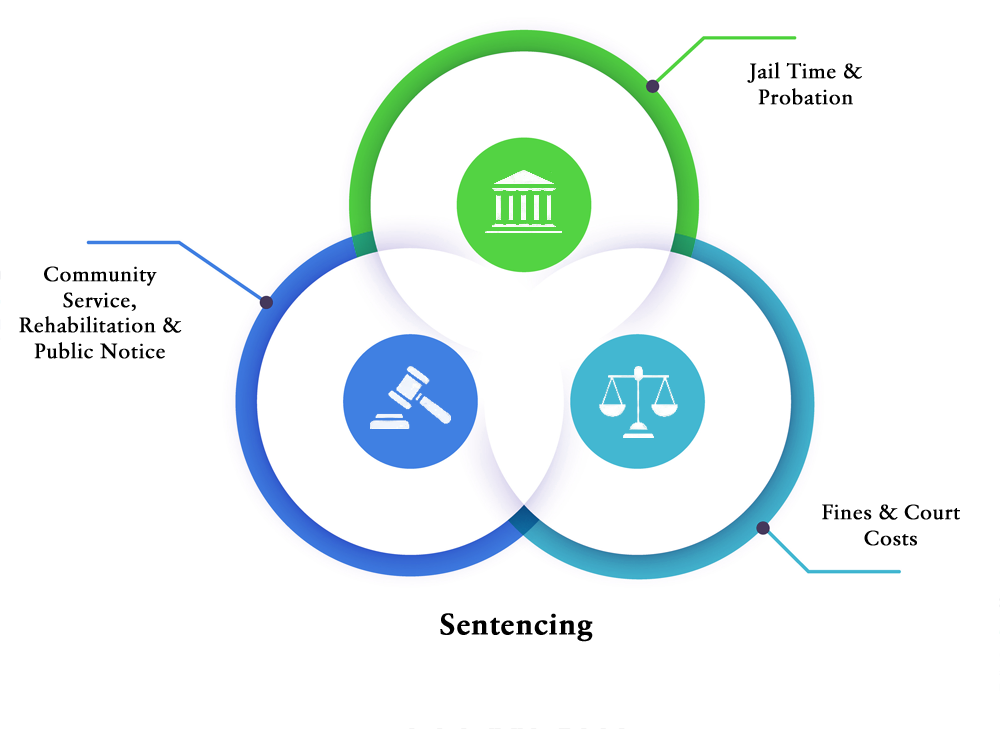
Since a second DUI conviction within ten years is treated as a high and aggravated misdemeanor, the judge has strict rules to follow when sentencing you. The law typically requires a mandatory minimum of 72 hours in jail. Unlike some other charges, the judge cannot waive this time or let you serve at home. Instead, you must physically serve at least three days in jail. Beyond that initial time, you are usually sentenced to a total of 12 months, with the remaining time served on probation. You will also be required to pay a fine between $600.00 and $1,000.00, but once court surcharges and fees are added, the total cost often jumps to nearly $2,000.00.
In addition to jail and fines, a second conviction requires a massive time commitment for community service and rehabilitation. You must complete 240 hours of community service, which is significantly more than for a first-time offense. You are also legally required to undergo a professional clinical evaluation to check for substance abuse issues. If the evaluator recommends it, you will need to complete a treatment program at your own expense. Finally, you might have to attend a 20-hour DUI school and pay to have your name, address, and mugshot published in the local county newspaper. These requirements are mandatory floor penalties, meaning the judge can actually give you a harsher sentence, but they are not allowed to give you anything less.
Aggravating Factors
While a second DUI within ten years already carries stiff mandatory minimums, certain aggravating factors can further escalate the legal consequences. These factors can turn a standard misdemeanor into a high and aggravated misdemeanor or even a felony, and they often lead judges to impose jail time far beyond the 72-hour minimum. The most common aggravating factors include having a child under the age of 14 in the vehicle, which triggers a separate charge of DUI child endangerment. Each child in the car has the potential for an additional DUI charge. If you are facing your second DUI, this can lead to an immediate stack of multiple convictions and the potential for several consecutive months in jail.
Another major aggravating factor is the driver’s blood alcohol concentration level. While the legal limit is 0.08%, a high BAC of typically 0.15% or higher often causes prosecutors to seek harsher sentences and may restrict your ability to get a limited driving permit. Additionally, if the DUI resulted in an accident involving serious injury by vehicle or homicide by vehicle, the charge is elevated to a felony, punishable by up to 15 years or more in prison per victim.
Fines and Fees
Paying for a second DUI in Georgia involves much more than just the fine mentioned by the judge. It is a long-term financial commitment that covers court costs, state requirements, and private fees. Your base fine could be between $600.00 and $1,000.00, but Georgia adds mandatory surcharges for state funds that can push your total court payment closer to $1,500.00 or $1,800.00. On top of that, you are required to pay a monthly probation fee, usually around $40.00 to $50.00, for a full year. There are also smaller mandatory costs, such as a $25.00 fee to have your mugshot and conviction published in the local newspaper and a $310.00 fee to eventually get your driver’s license back from the Department of Driver Services.
The most expensive parts of a second DUI often come from the required rehabilitation and equipment. You must pay $360.00 for the state-mandated DUI school and roughly $150.00 for a clinical evaluation. If that evaluation says you need treatment, you will have to pay for those weekly sessions out of your own pocket. Furthermore, if you want to drive during your suspension, you will likely need to install an ignition interlock device. Between the installation fee and the monthly monitoring costs, this device alone can cost you over $1,000.00 for the year. When you add everything up, the fines, the classes, the probation, and the car equipment, the total cost for a second DUI in Georgia typically ranges from $3,000.00 to over $4,500.00, even before you consider higher insurance rates.
FAQs
How much jail time is mandatory for a second conviction? You might serve a minimum of 72 hours in jail, though judges often sentence repeat offenders to between 10 and 90 days. There are also alternative sentencing options that can help you avoid longer jail stays, depending on the circumstances of your arrest.
How long will my driver’s license be suspended? If your second DUI occurs within five years of the first, you face a three-year suspension with a strict period of 120 days where no driving is allowed at all.
Can I get a permit to drive to work? You may apply for an ignition interlock limited permit after the initial 120-day suspension is over, provided you meet all state requirements and install the device.
Will my photo really be published in the newspaper? Yes, it is possible. State law often requires that your name, address, and photo be published in the local county newspaper at your expense if it is your second conviction in five years.
Is a second DUI considered a felony in Georgia? A second DUI is typically prosecuted as a misdemeanor, but it can become a felony if it involves a serious injury, a death, or if it is your fourth conviction within ten years.
License Revocation/Suspension
What happens to your driver’s license after a second DUI depends entirely on how much time has passed since your first arrest. If your second arrest happened within five years of the first, your license is suspended for a total of three years. This process starts with a suspension for the first 120 days, meaning you cannot drive at all, not even to work or the grocery store. After those four months are up, you can apply for a special permit, but only if you install an ignition interlock device and stay in a substance abuse treatment program for at least 12 months. Once you finish that year with the device, you can drive for another two months on a regular limited permit before you finally become eligible to get your full license back. However, if your second DUI happens more than five years after the first, the state usually treats it like a first offense for your license, allowing you to get a permit immediately and your full license back in just four months.
To get your full driving privileges back after either type of suspension, you have to complete several state requirements. You must finish a 20-hour DUI risk reduction class and have a professional clinical evaluation to see if you need further treatment. You also have to pay a reinstatement fee of either $200.00 or $210.00 to the Department of Driver Services. It is important to know that while a second DUI results in a suspension, a third DUI within five years is considered a revocation. A third conviction will label you a habitual violator, and your license will be revoked for a full five years, which is a much more difficult situation to resolve.
Ignition Interlock Device
An ignition interlock device is a small, car-mounted breath test that makes sure you are sober before the engine can start. If you are convicted of a second DUI within five years, you are legally required to have this device installed on any vehicle you drive for at least 12 months if you want to regain limited driving privileges. The process begins after you complete a 120-day suspension, during which you cannot drive at all. Once that period ends, you can apply for an ignition interlock limited permit, which allows you to drive to specific places like work, school, or medical appointments, provided the device is in your car. Every time you get behind the wheel, you must blow into the mouthpiece. If you blow and the device detects even a tiny amount of alcohol, often as low as 0.02%, it will log a fail, and the car will not start.
Owning and using the device is both a financial and a behavioral commitment. You are responsible for all costs, which typically include a $100.00 to $200.00 installation fee and a monthly monitoring fee of about $75.00 to $100.00. To keep the device working correctly, you must take your car to a service center every 30 to 60 days for calibration. While you are driving, the device will also ask for rolling retests at random times to make sure you didn’t have someone else start the car for you. If you miss a retest or fail a sample while driving, the car won’t stop, but it may honk the horn or flash the lights until you pull over and turn it off. Most importantly, every single test result is recorded and sent to your probation officer or the Department of Driver Services. A failed test or any attempt to tamper with the device can result in your permit being revoked and could even lead to more jail time for violating your probation.
Mandatory Alcohol and Other Drug Assessments
A second DUI conviction requires a professional clinical evaluation because the state wants to see if you are suffering from an underlying struggle with alcohol or drugs that needs to be addressed. This is not a standard test you can pass or fail. Instead, it is a face-to-face meeting with a state-certified counselor who reviews your history and current situation to determine what kind of help you might need. This evaluation is mandatory, and you will be responsible for paying the fee, which is usually between $150.00 and $200.00. You cannot skip this step if you want to finish your probation or eventually get your driver’s license back.
If the counselor determines that you have a substance abuse issue, they will recommend a specific treatment plan, most often called ASAM level 1 treatment. For a second offense, this usually means attending one three-hour group counseling session every week for at least 17 weeks. This requirement is very strict. If you are trying to get an ignition interlock permit to drive, you have to show proof that you are already enrolled in this treatment. If you stop going to your classes, the treatment provider will notify the state, which can lead to your driving permit being cancelled and a warrant being issued for your arrest for violating your probation.
Community Service
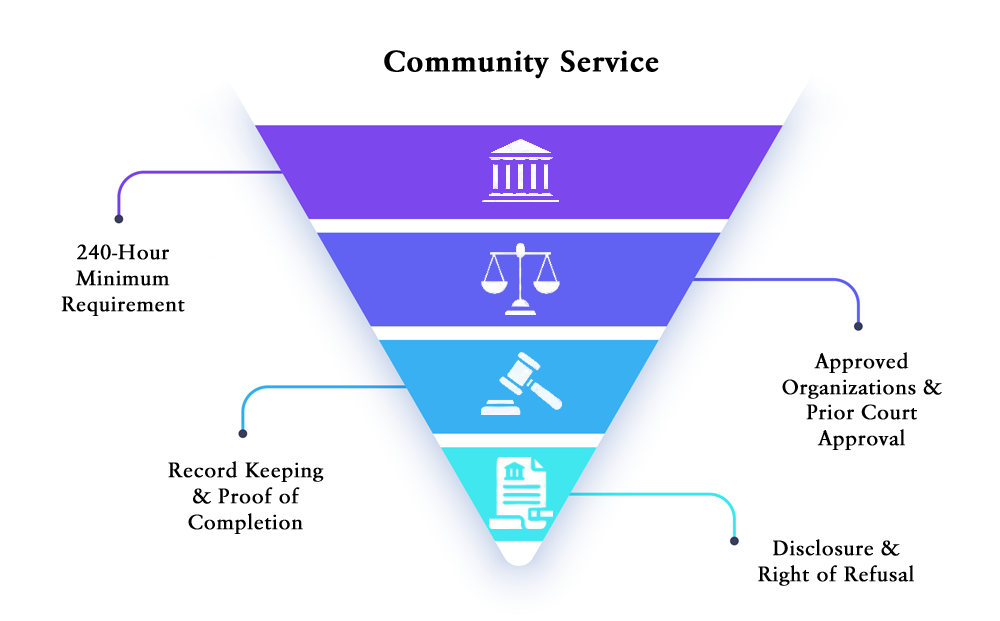
If you are convicted of a second DUI within a 10-year period, community service is typically a mandatory component of sentencing. While a first offense typically requires 40 hours, the requirement for a second offense increases significantly to a mandatory minimum of 240 hours. This is considered a minimum, meaning the judge generally cannot reduce these hours, although they have the discretion to order even more if the circumstances of the case are severe.
These hours must be performed at a registered non-profit or charitable organization. Common examples include food banks and animal shelters. However, it is vital to get approval from your probation officer or the court before starting, as some jurisdictions have specific lists of approved sites and may not accept hours performed at certain locations, such as your own church or school. When you arrive at an organization, you are legally required to notify them that you are performing court-ordered service and disclose the nature of your offense. Based on this information, the organization has the right to refuse you as a volunteer.
To receive credit for your service, you must keep meticulous records. Most courts require a signed log sheet showing the exact dates and times you worked, and they often demand a formal letter from the organization on its official letterhead verifying the total number of hours you completed. For a second offense, this 240-hour requirement must be finished within the 12-month probation period. Failing to complete these hours on time is a violation of your probation and can result in a warrant for your arrest and return to jail to serve the remainder of your 12-month sentence.
Victim Impact Panel
A victim impact panel is a meeting you are often required to attend as part of your probation for a second DUI. Unlike a classroom setting that focuses on facts or laws, this session is led by real people, such as victims, their family members, or emergency responders, who share personal stories about how drunk driving accidents changed their lives. The goal is to help you understand that a DUI isn’t a victimless crime, even if no one was hurt in your specific situation. These sessions are usually very serious, last about two hours, and cost around $50.00. Most people attend panels organized by Mothers Against Drunk Driving, and you must receive a certificate at the end to prove to the court that you were there.
While the main DUI law doesn’t explicitly name this panel as a mandatory requirement for everyone, judges use their broad power to make it a mandatory special condition of probation for nearly every second-time offender.
Occupational Driver’s License
In Georgia, there is no standard occupational license that lets you drive freely to work after a second DUI. Instead, you must apply for an ignition interlock limited permit, which is much harder to get and has very strict rules. Before you can even apply, you must serve a 120-day suspension, which means for four months, you cannot drive anywhere for any reason. This includes driving for work or emergencies. There are no exceptions. Once that time is up, you can get a permit, but only if you install an ignition interlock device in your car, finish DUI school, and prove you are enrolled in a clinical treatment program. This permit only allows you to drive to very specific places: your job, your school, medical appointments, pharmacy trips, and your required treatment meetings or probation appointments.
This special permit lasts for one year, and you must pay a $25.00 fee to get it. If you drive anywhere not on the approved list, such as a grocery store, a friend’s house, or a movie theater, you are breaking the law and could have your permit cancelled immediately. Even after you successfully finish the interlock year and eventually get your full license back, Georgia law requires your new license to have a distinctive red stripe across the top. This stripe tells any officer who pulls you over that you have multiple DUI convictions, and it must remain on your license for several years.
Alternative Sentencing
There are special options that help you avoid the harshest punishments or focus on recovery rather than just jail time. One of the most common goals is a reduction in charges, where your lawyer negotiates with the prosecutor to change the DUI to reckless driving. This is a major win because it removes the mandatory three-year license suspension and the required 72 hours in jail. However, a prosecutor usually agrees to this only if there is a problem with the police evidence, such as a malfunctioning breath test or an illegal traffic stop.
Another popular alternative is joining a DUI accountability court. This is a long-term, strict program of about 12 to 24 months that focuses on intense treatment, weekly drug testing, and regular meetings with a judge. While it is very demanding, the benefit is that judges often agree to waive most of your mandatory jail time or reduce your fines as a reward for your progress. If you do have to serve jail time and are worried about your job, you can ask for work release. This allows you to leave the jail during the day to work and then return at night to serve your sentence, helping you stay employed and support your family while still fulfilling the court’s requirements.
Early Intervention for Second Offense DUI Charges
Early intervention for a second DUI means starting your required classes and treatment programs right away, even before you go to court or are officially convicted. Instead of waiting for a judge to tell you what to do, you proactively finish DUI school, get a clinical evaluation, and enroll in the 17-week treatment program. Taking these steps early can show the judge and prosecutor that you are serious about changing your behavior. While the law still requires at least 72 hours in jail, completing early intervention can often prevent a judge from giving you much longer jail time, which can sometimes be as high as 90 days or more for repeat offenders.
Another major benefit of early intervention is that it prevents long stretches where you are stuck without a license. For a second DUI within five years, you must serve a 120-day suspension before you can drive at all. To get your ignition interlock limited permit on day 121, you are legally required to show proof that you are already enrolled in treatment and have completed DUI school. If you wait until after your court date to start these things, you might end up waiting several extra months to drive simply because you haven’t finished the paperwork. By finishing everything early, you make yourself look better to the court and ensure you can get back on the road for work and family as soon as the law allows.
Why Breath Test Results Do Not Prove Guilt
Think of a breath test result as a piece of scientific evidence that can be argued in court, rather than an automatic guilty verdict. For a second DUI charge, a defense often focuses on the fact that breath tests are sensitive machines that can be affected by many things other than how much you actually drank. For example, the machine can be tricked by mouth alcohol caused by medical issues like acid reflux, dental work, or even being on a low-carb keto diet, all of which can make your BAC reading look much higher than it really is. Additionally, if the police officer didn’t watch you closely for at least 20 minutes before the test, as required by law, the results might be considered unreliable and could be thrown out of your case.
There are also legal reasons why these results might not be used against you. The state must prove that the machine was perfectly maintained and that the officer followed every single rule during the arrest. If the officer made a mistake when reading you your implied consent rights, or if the machine’s maintenance logs are missing, the judge may suppress the evidence so a jury never sees it. Furthermore, the state cannot use your refusal to take a breath test as evidence of guilt in a criminal trial. This means that without a valid, perfect test result, the prosecutor is forced to rely on subjective evidence like an officer’s opinion on your speech or balance, which is much easier to challenge in court.
Why Field Sobriety Tests Do Not Prove Guilt
Field sobriety tests are not an automatic proof of guilt because they are highly subjective and often inaccurate. When an officer asks you to walk in a straight line or stand on one leg, they aren’t using a scientific machine. In fact, they are simply recording their own personal opinion of how you look. For a second DUI, where the stakes are higher, these results are frequently challenged because things like being nervous, having a physical injury, or even just being over the age of 65 can make a perfectly sober person fail the test. Furthermore, environmental factors like uneven pavement, wind, or the distracting flashing lights of a police car can easily throw off your balance, leading an officer to mistakenly record a sign of intoxication.
Legally, the most important thing to know is that these roadside tests are 100% voluntary. You have a constitutional right to refuse to perform these physical acts, and the prosecutor is not allowed to use your refusal against you as evidence of guilt in court. This is a massive protection for drivers. While the eye test is considered more scientific, it must still be performed perfectly according to strict manual rules, or a judge can throw it out. Ultimately, without a scientific blood or breath test, a failed field sobriety test is just one officer’s opinion, which a good defense can often prove was influenced by bias or poor roadside conditions.
Why Blood Tests Do Not Prove Guilt in Second Offense DUI Cases
While a blood test result is often seen as the gold standard of evidence, it still does not automatically prove you are guilty of a second DUI. For the results to be used in court, the state must prove that every step, from the moment the needle touched your arm to the final lab report, was handled perfectly. One major way to challenge these results is to examine the chain of custody. Because blood is a living substance, it can actually ferment and create its own alcohol if it isn’t refrigerated or transported quickly. If there is a delay or a mistake in how the blood was stored, the lab might report a high alcohol level that wasn’t actually in your body when you were driving.
Another way to challenge a blood test is to examine how it was collected and your legal rights. Under Georgia law, only specific medical professionals, such as registered nurses or trained lab techs, may draw your blood. This means that if the person wasn’t properly qualified, the test can be thrown out. Most importantly, you have a right to an independent test by a doctor of your own choosing immediately after the state’s test. If you asked for this and the officer didn’t help you get one, such as refusing to drive you to a nearby hospital or stop at an ATM so you could pay for it, a judge can suppress the state’s blood evidence entirely. Without that scientific proof, the prosecutor’s case becomes much harder to win.
What the 3-Hour Rule Means in a Second Offense DUI Case
The three-hour rule is a legal standard that allows the state to convict you of a DUI without needing to prove you were actually driving poorly at the time you were pulled over. If your blood alcohol concentration is 0.08% or higher at any point within three hours of driving, and that alcohol came from drinks you had before or while you were driving, you are considered guilty per se. This means that even if you felt perfectly sober and were driving safely, the law assumes you were impaired simply because of that number. For a second DUI offense, this rule is a powerful tool for prosecutors because it allows them to use a breath or blood test taken at the police station or hospital long after the actual traffic stop to secure a conviction.
However, this rule also serves as a critical defense shield. For a chemical test to be used as per se evidence, it generally must be administered within that strict three-hour window. If there is a long delay, for example, if you were in an accident and it took four hours for the police to finally draw your blood at a hospital, the prosecutor can no longer use that result to automatically prove you were over the limit. In those cases, the state is forced to prove a DUI less safe charge instead, which is much harder for them because they have to rely on subjective evidence, such as how you looked, smelled, or performed on balance tests.
Protect Your Future
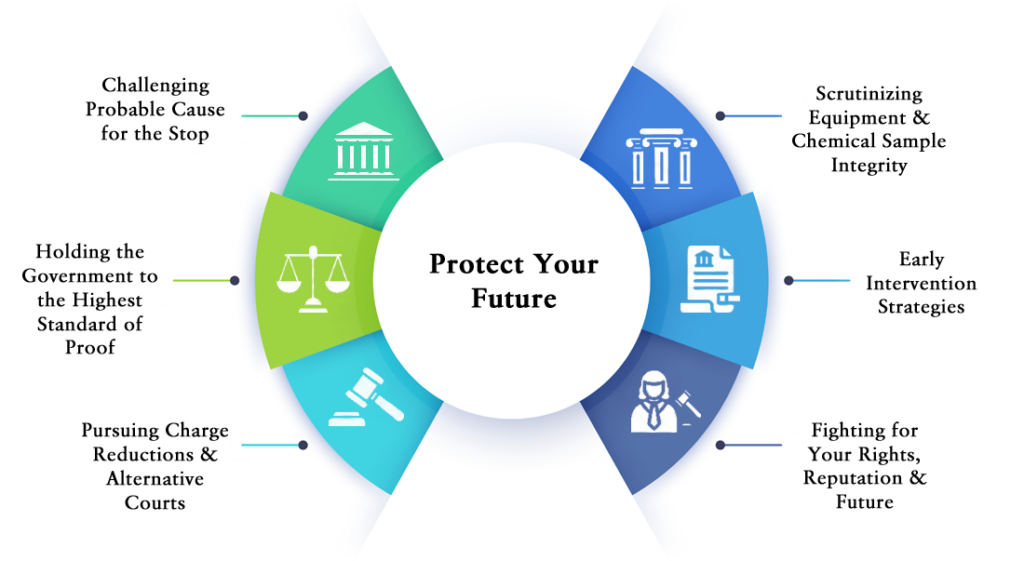
Facing a second DUI charge in Georgia is a serious legal challenge, but it is far from an open-and-shut case for the prosecution. The State’s entire strategy relies on a series of assumptions, including that the equipment was perfect, the officer’s observations were unbiased, and the chemical samples were untainted. In addition to challenging the breath test, blood test, and field sobriety tests, there are other avenues to challenge the case. They include:
The Traffic Stop (Reasonable Suspicion)
Even in a second-offense DUI case, everything begins with the traffic stop. The officer must have a real and specific legal reason to pull the vehicle over.
That reason cannot be based on a guess or a hunch It must be based on something clear, such as speeding, failing to maintain a lane, or another observable traffic violation.
If the driving appears normal and there is no clear violation, that raises questions about whether the stop should have happened at all. If the stop was not valid, then everything that happened afterward can be challenged.
Example:
Sarah is driving home late at night. The officer claims she was “weaving,” but the dashcam shows her staying in her lane the entire time. If there was no real violation, the stop itself may not hold up, even though this is her second DUI.
The Arrest (Probable Cause)
After the stop, the officer must decide whether there is enough evidence to make an arrest. This requires probable cause, meaning there must be enough reliable evidence to believe the driver was impaired.
That decision cannot be based on just one thing. Officers often point to signs such as the smell of alcohol, red eyes, slurred speech, or nervous behavior. But those signs can have other explanations and do not automatically prove impairment.
In a second DUI case, the consequences may be higher, but the legal standard does not change. If the evidence does not clearly support the arrest, that decision can still be challenged.
Example:
Mike has allergies and had just left a long work shift. His eyes are red, and he appears tired. The officer interprets this as impairment. But when looked at closely, those same signs can be explained by fatigue and irritation, not alcohol.
Video Evidence
Video can be one of the most important parts of a second DUI case.
Dashcam and body camera footage can show how the vehicle was actually being driven and how the driver behaved during the stop. It may show whether the person was steady, speaking clearly, following directions, and acting normally.
If the video does not match what the officer claimed in the report, that can raise serious questions about what really happened.
Example:
David’s report says he was unsteady and confused. But the bodycam shows him standing normally, answering questions clearly, and following instructions without issue. That gap between the report and the video can change the entire case.
Health Problems Can Be Mistaken for Impairment
Not every sign that looks like impairment is caused by alcohol. Many health conditions can create the same symptoms officers are trained to look for.
Issues like acid reflux, diabetes, neurological conditions, injuries, or even anxiety can affect speech, balance, appearance, and behavior. Medications can also impact how someone looks or responds during a stop.
These conditions can easily be misunderstood, especially in a high-pressure roadside situation.
Example:
Taylor is diabetic and experiencing low blood sugar. They seem confused and slow to respond. What looks like impairment at first may actually be a medical issue that requires attention, not an arrest.
Less Safe to Drive
At the center of every Georgia DUI case is the question of whether the driver was actually less safe to drive.
That does not simply mean alcohol was present. It means the State must prove that the driver’s ability to drive was actually impaired.
In a second-offense DUI, the State still has to prove that point. Fear, fatigue, stress, illness, injury, or other medical conditions can sometimes look like impairment.
Example:
Alex was dealing with a recent injury and was driving cautiously and stiffly. To an officer, that might look unusual. But once the full picture is understood, it had everything to do with pain and nothing to do with impairment.
Just because you were accused of a second-offense DUI does not mean you will be convicted. Zeliff | Watson is known for its unconventional approach and steadfast commitment to challenging every part of a second-offense DUI case, from the initial stop to the collection of evidence to the lab results.
By launching a thorough, independent investigation, engaging in relentless preparation, and executing a strategic defense, the firm focuses on exposing weaknesses in the prosecution’s case and being better prepared than the officer who made the arrest and the prosecutor seeking to convict you.
Take Back Control and Schedule a Free Case Evaluation Today
Achieving the best possible result in a legal matter often starts with a simple step: a free case evaluation. Because preparation is the cornerstone of a successful defense, getting organized early gives an individual the best chance of influencing the final outcome of their case. Much of the stress following an arrest involves the unknowns of the legal system, which can quickly become overwhelming.
Zeliff and Watson offer a safe, confidential space for individuals to get answers and understand their options. During these free evaluations, the firm helps people navigate the complexities of the law and identify defense strategies to seek an acquittal, reduced charges, or a dismissal. The team focuses on immediate action, such as identifying time-sensitive evidence and creating a personalized plan of action. The primary goal of this no-cost service is to replace confusion with confidence, allowing individuals to move forward with a clear sense of purpose.
A Simple Process to Getting Started

Schedule a Free Case Evaluation
Schedule a free, no-obligation, and confidential case consultation in person, online, or over the phone. This will help you understand how your case can be challenged, potentially leading to a reduction, dismissal, or acquittal of your charges. Click here to schedule your case evaluation.

Meet Our Defense Team and Conduct a Case Evaluation
During your free case evaluation, you’ll have the opportunity to ask questions, receive answers and legal guidance, and collaborate with our attorneys to better understand your side of the story, gather evidence, and devise a strategy to achieve the best possible outcome for your pending criminal charges.

Start Defending Your Case
After your free case evaluation, Zeliff & Watson will assist in preserving evidence and safeguarding your rights, ensuring your protection throughout the process. The defense team will also provide a proposed fee to represent your case, with the goal of achieving the best possible outcome.