

Blew Over the Limit? That Doesn’t Mean You’re Guilty
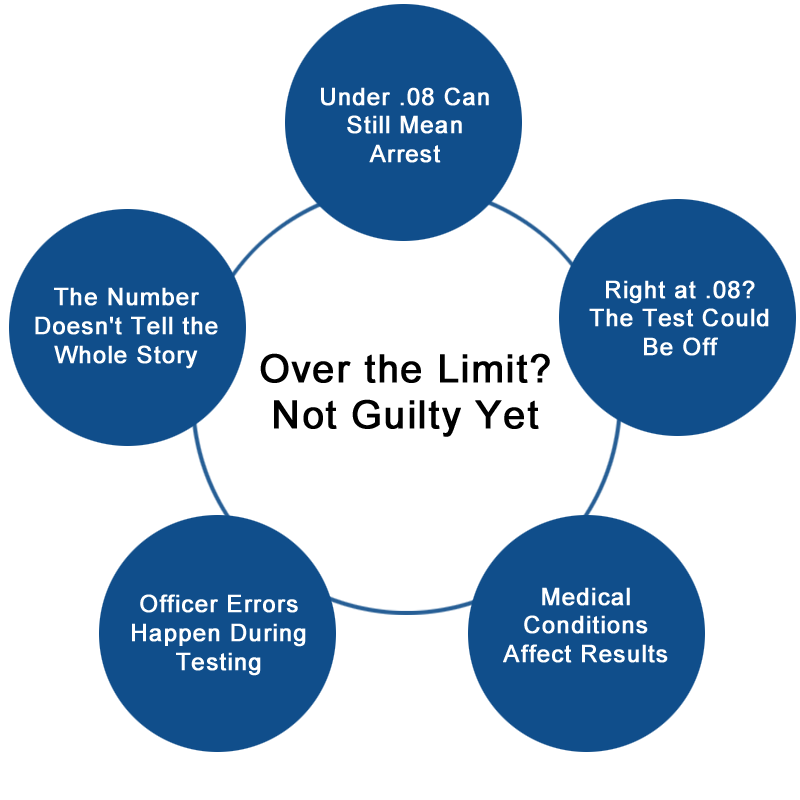
When you see the number, whether it’s under, right at, or over .08, your stomach drops. You don’t even fully understand what it means yet, but it feels bad. You start imagining the worst: your job, your license, your reputation, everything you’ve built slipping away over one number.
If the number is under .08, you might feel brief relief, thinking you’re in the clear until the officer still arrests you. That confusion hits hard.
If it’s right at .08, panic mixes with disbelief. You wonder if it could be off by just a hair.
And if it’s over .08, it feels like the world is closing in. But then a thought creeps in: “What if it’s wrong?” You think about your reflux, your cold medicine, your mouthwash, or the officer rushing you through the test.
That’s when you start searching for answers. And here’s the truth: that number doesn’t always tell the whole story.
At Zeliff | Watson, our mission is to protect you, ease the stress and anxiety that come with challenging your breath test results, and help you sleep at night knowing you’re fighting back. Our goal is to challenge the breath test so it can’t be used against you and to have your DUI dismissed, reduced, or acquitted.
Why Breath Test Results Can Be Misleading
A breath test does not actually measure the amount of alcohol in your blood. It measures alcohol in your breath and then uses a formula to estimate what your blood alcohol level might be. The issue is that the formula assumes everyone’s body works the same way, which is not true.
Your body temperature, how fast you breathe, what you have eaten or drunk, and even things you are exposed to, such as cleaning products or fumes, can all affect the results.
The machines are only as accurate as the people using them. If an officer skips steps, rushes the process, or uses a machine that has not been properly maintained, the result may not mean anything at all.
The Zeliff | Watson defense team often uncover serious problems such as missing calibration records, expired maintenance, software glitches, or damaged parts inside the device. These are not loopholes; they are real, recognized errors that can make the results unreliable. Ultimately, breath tests are tools, and like any tool, they can fail. When something goes wrong, whether it is a machine issue, operator mistake, or interference from everyday products, the reading can easily be misleading.
Although there are hundreds of ways to challenge the accuracy of a breath test, the examples below highlight some of the most common ways your results could be contested in court.

Challenging the Breath Test: Proven Legal Defenses
- Improper Calibration of the Breath Test
Breath testing machines must be checked and calibrated regularly to stay accurate.
Challenge: If maintenance logs show it wasn’t tested or adjusted when required, the results can’t be trusted.
Example: The machine used on Jason hadn’t been calibrated in over two months. His attorney showed the court the maintenance gap, and the results were thrown out. - Operator Error or Lack of Certification
Only trained and certified officers are allowed to give breath tests.
Challenge: If the officer wasn’t certified or didn’t follow approved steps, the results can be excluded.
Example: The officer who tested Emily had an expired certification. The judge ruled her test invalid. - Failure to Observe the 20 Minute Waiting Period
Before testing, the officer must continuously observe the driver for 20 minutes to ensure no burping, vomiting, or eating occurs.
Challenge: If the officer wasn’t watching the entire time, mouth alcohol can affect the results.
Example: The officer left the room for a few minutes. During that time, Kevin burped. The court ruled the test unreliable. - Mouth Alcohol Contamination
Alcohol can linger in the mouth from burping, mouthwash, or dental work, which can cause a falsely high reading.
Challenge: The defense can argue that the machine picked up mouth alcohol, not deep-lung air.
Example: Maria had a dental procedure earlier in the day and the dentist used a medicated rinse containing alcohol. She was stopped hours later. Her BAC read 0.10%, but later evidence showed it came from the dental procedure, not from her bloodstream. - Improper Machine Usage or Faulty Maintenance Records
Breath machines keep digital logs that show use, errors, and diagnostics.
Challenge: Errors or warnings in those records can make the results unreliable.
Example: The log showed “system error” warnings the same day Daniel was tested. The judge excluded the results from evidence. - Residual Alcohol in the System (Rising BAC Defense)
Alcohol levels rise for a period after drinking before they start to fall.
Challenge: If tested too soon after drinking, the reading may be higher than it was while driving.
Example: Tyler had his last drink minutes before leaving the bar. He blew 0.09% twenty minutes later, but his attorney proved his BAC was lower at the time he was driving. - Medical Conditions Affecting Results
Conditions like acid reflux (GERD), diabetes, or low-carb diets can trigger false positives.
Challenge: These conditions can create gases in the mouth that mimic alcohol.
Example: Sarah has GERD. Her breath test showed 0.12%, but her blood test later came back clean. The DUI charge was dropped. - Interference from Substances or Environmental Factors
Certain chemicals or vapors, like paint fumes, acetone, or cleaning products, can confuse the machine’s sensors.
Challenge: These substances can make the machine mistake fumes for alcohol.
Example: Mike works in an auto body shop. Paint fumes caused a false 0.08% reading, which was later dismissed due to the contamination. - Improper Temperature Control
The temperature of the breath sample affects accuracy. Machines are supposed to test air at body temperature (around 34°C).
Challenge: If the internal sensor is off, the reading can be artificially high.
Example: The machine used on Amanda showed internal temperature errors. The defense proved her reading was inflated by at least 0.02%. - Breaks in the Chain of Custody or Record Errors
Every step of the testing process, from giving the test to printing the report, must be properly documented.
Challenge: Missing signatures or data entry mistakes can make the test results inadmissible.
Example: The technician who transferred the data didn’t sign the log. The court ruled the evidence couldn’t be used.
Other Conditions to Consider
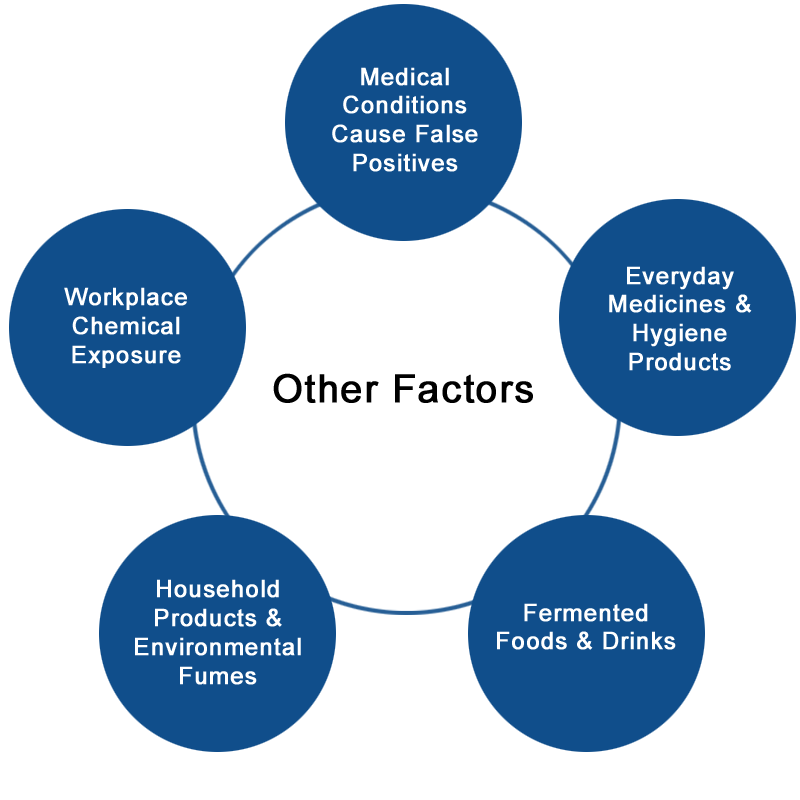
Aside from these defenses, high breath test readings can also result from indirect causes such as certain foods, drinks, or exposure to everyday products and chemicals.
Medical Conditions and Common Products
Many people naturally produce alcohol-like compounds in their breath, especially those with acid reflux, diabetes, or who are on low-carb diets. Everyday medicines and hygiene products can also trigger false positives. These include cough syrups, cold medicines, mouthwash, throat sprays, and even muscle rubs or CBD oils. Many of these items contain alcohol or similar substances that can linger in the mouth and trick the machine.
Foods and Drinks
Certain foods can also cause a temporary spike in readings. Bread, pizza dough, ripe fruit, kombucha, soy sauce, and vinegar-based foods all go through natural fermentation that produces trace alcohol. Even certain breath mints and gums used before the test can distort results.
In short, a breath test is not foolproof. It can be affected by what you ate, your health, or even what you used to freshen your breath. This is why experienced DUI attorneys often investigate these details before accepting the test results as accurate.
Environmental and Chemical Exposure
Breath tests can sometimes give false readings because they react to common household products and environmental fumes, not just alcohol. Everyday items such as hand sanitizers, disinfectant sprays, nail polish remover, perfume, and hair products release vapors that can confuse the machine, especially after frequent or heavy use in enclosed spaces.
People who work around paint, glue, cleaning supplies, gasoline, or exhaust fumes are often exposed to chemicals that can mimic alcohol. These substances, including solvents, fuels, and adhesives, can linger in the body and trigger false positives. Even when someone has not consumed alcohol, these vapors can produce a reading close to the legal limit.
Workers in construction, auto repair, manufacturing, or janitorial jobs are at higher risk because repeated exposure to industrial cleaners or fuel vapors can stay in the system for hours. This can make it appear as though a person has been drinking when they have not.
The biggest misconception among people charged with DUI is that breath tests are scientific devices that cannot be challenged in court. In reality, only a small number of DUI defense law firms have the training and experience to challenge these results successfully. Zeliff | Watson is one of them. Every day, our defense team goes into court and exposes the flaws behind the machines, the procedures, and the operators. Their work often leads to breath test results being thrown out, resulting in one case win after another. Below are several examples of how breath test machines can be challenged.

Collecting Evidence
Thorough evidence collection becomes especially vital when disputing the accuracy of a breath test. A skilled defense team conducts an independent investigation to uncover details that police or prosecutors may have missed. Reviewing video and audio recordings can reveal whether the officer properly followed every step, including the required observation period and the correct operation of the testing equipment. Examining police records and maintenance documentation can expose overlooked issues such as expired certifications, calibration lapses, or breaks in the chain of custody.
Each piece of evidence adds weight to the argument that the breath test may be flawed or mishandled. Once those problems are identified, your attorney can move to have the results excluded, question the validity of the officer’s actions, and significantly weaken the prosecution’s evidence against you.
Preparation Determines the Outcome
In breath test cases, winning is never an accident. The outcome goes to the side that prepares relentlessly, digs into the evidence with precision, and knows the facts so thoroughly that every weakness in the test becomes clear. When an attorney understands their client, studies every report, breaks down every frame of the video evidence, and stays three steps ahead of the prosecution, they are in the best position to expose errors, create reasonable doubt, and secure the best possible outcome.
Schedule a Free Case Evaluation
At Zeliff | Watson, we provide free, no-obligation case reviews to help you understand your situation and move forward with confidence. These meetings typically last about an hour and are fully protected by attorney-client privilege under Georgia law, which means everything you share remains completely confidential.
During your case evaluation, both you and the legal team will have the opportunity to ask questions, discuss the details of your arrest, review evidence, and begin developing a strategy to challenge the breath test results. The goal is to identify every possible weakness in the prosecution’s case and work toward the best possible outcome for you.
A Simple Process to Getting Started

Schedule a Free Case Evaluation
Schedule a free, no-obligation, and confidential case consultation in person, online, or over the phone. This will help you understand how your case can be challenged, potentially leading to a reduction, dismissal, or acquittal of your charges. Click here to schedule your case evaluation.

Meet Our Defense Team and Conduct a Case Evaluation
During your free case evaluation, you’ll have the opportunity to ask questions, receive answers and legal guidance, and collaborate with our attorneys to better understand your side of the story, gather evidence, and devise a strategy to achieve the best possible outcome for your pending criminal charges.

Start Defending Your Case
After your free case evaluation, Zeliff & Watson will assist in preserving evidence and safeguarding your rights, ensuring your protection throughout the process. The defense team will also provide a proposed fee to represent your case, with the goal of achieving the best possible outcome.