

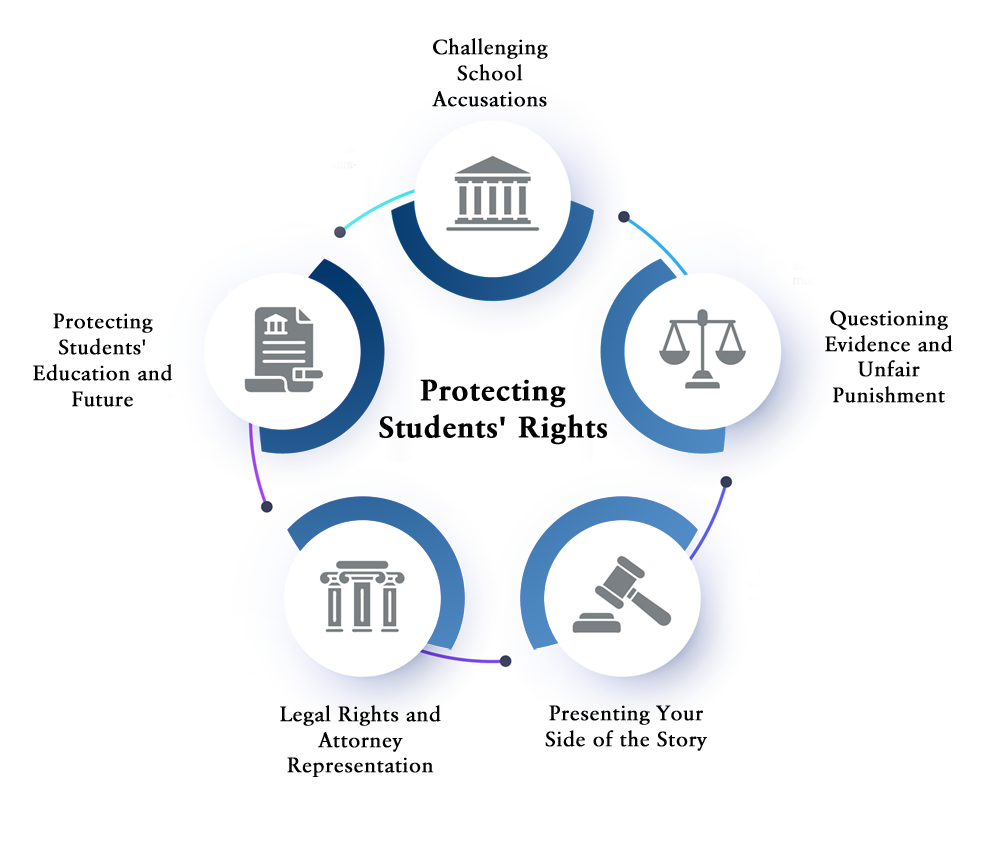
At Zeliff | Watson, the mission is to protect students’ rights, alleviate the stress and anxiety families face during school disciplinary tribunal hearings, and fight for the best possible outcome. The firm understands that a child’s education, reputation, and future opportunities are at stake. Its goal is to help families regain peace of mind by fighting to prevent expulsion, long-term suspension, alternative school placement, and a damaging disciplinary record while protecting each child’s education, dignity, and future.
Students Have Rights, and Schools Must Respect Them
Students and their parents have the right to challenge the school’s accusations, present their side of the story, and fight to protect the student’s education, reputation, and future.
Just because school administrators accuse a student of violating school rules does not mean the accusations are true, the evidence supports them, or the proposed punishment is fair or justified.
Georgia law provides students with important rights and protections during school disciplinary proceedings, including the opportunity to challenge accusations, question witnesses, present evidence, and be represented by an attorney.
At Zeliff | Watson, the firm’s defense attorneys are committed to ensuring that every student’s voice is heard, the school’s accusations and actions are thoroughly scrutinized, and every available defense is explored. Their goal is to challenge unfair accusations, prevent unjust punishment, and protect students from disciplinary consequences that could jeopardize their education, reputation, and future.
What Happens at a Georgia School Disciplinary Tribunal Hearing?
A Georgia school disciplinary tribunal is different from a criminal court. Your child will not appear before a criminal court judge or jury. Instead, a hearing is conducted through the school system to determine whether your child violated school rules and whether serious disciplinary measures, such as suspension for more than 10 days, expulsion, or placement in an alternative school, are appropriate.
During the hearing, school officials explain what your child is accused of doing and present supporting evidence. This may include statements from teachers, students, school administrators, or other witnesses, along with video recordings, disciplinary reports, and other school records.
You and your child have an opportunity to tell your side of the story, challenge the school’s evidence, question witnesses, and present information in your child’s defense. You also have the right to hire an attorney to represent your child throughout the process.
Unlike a criminal trial, the school generally does not have to prove its accusations beyond a reasonable doubt. The standard is typically whether the evidence shows that your child more likely than not violated school rules.
Although a school tribunal cannot sentence your child to jail, the consequences can seriously affect their education, school record, and future opportunities. If the incident could also result in criminal charges, statements made during the disciplinary process may create additional legal risks.
The Hearing Is Not Just About What Your Child Allegedly Did
What happened before, during, and after the incident can be just as important as the accusations against your child.
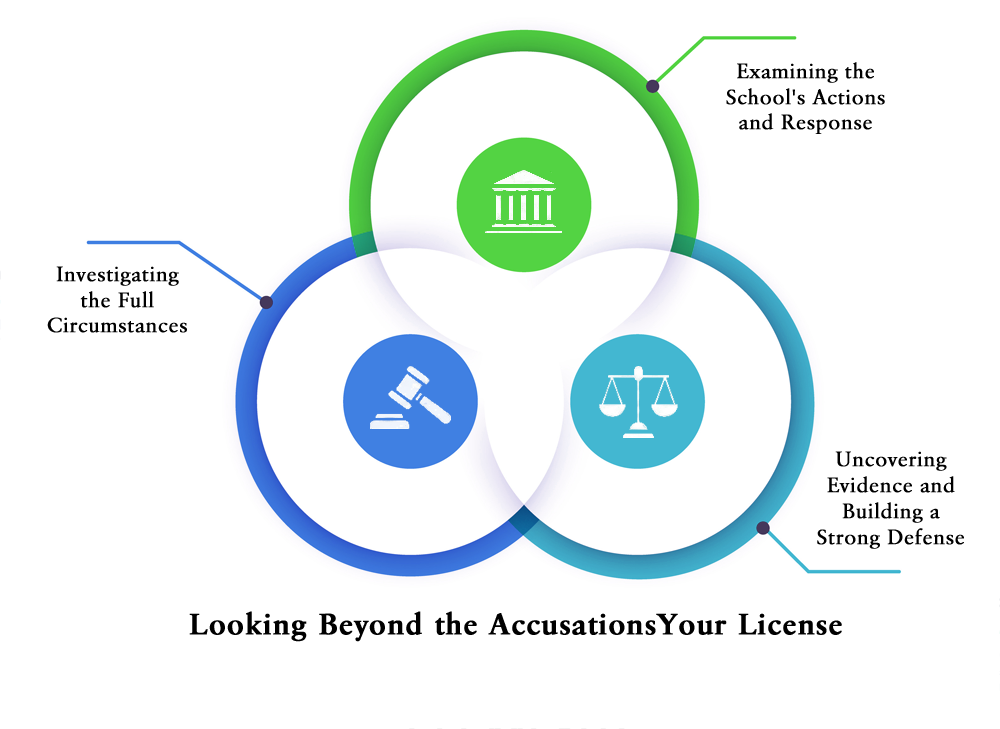
Much like a criminal defense attorney scrutinizes law enforcement’s actions during a criminal investigation, a school disciplinary defense attorney must examine the actions, decisions, and conduct of everyone involved.
The investigation should consider everyone and everything that contributed to the events leading up to the incident, influenced how the situation unfolded, or affected the school’s response.
How the school responded is equally important. What did school officials know, and when did they know it? What actions did they take? Did they take reasonable steps to prevent the situation from escalating? Did they investigate the incident thoroughly and fairly? Did they ignore important evidence, overlook the actions of other students, or fail to follow their own policies and procedures?
These questions can expose inconsistencies, reveal failures in the school’s handling of the situation, and uncover evidence that presents a very different picture from the one reflected in the accusations.
An experienced defense attorney can investigate the circumstances surrounding the incident, question the people involved, challenge conflicting evidence and testimony, scrutinize the school’s investigation and conduct, and present evidence supporting your child’s defense.
The goal is not simply to respond to the accusations. It is to uncover the complete story, hold the school accountable for its actions, and fight to ensure that your child is not unfairly blamed or punished.
What If Your Child Has Already Been Suspended or Expelled?
An unfavorable school disciplinary tribunal decision does not necessarily mean the fight is over.
If your child has been suspended or expelled following a tribunal hearing in Georgia, you may have the right to challenge the decision through an appeal. Depending on the circumstances, additional legal remedies, including civil action against the school or school district, may also be available.
Georgia’s school disciplinary appeals process provides a way to challenge decisions that may be unsupported by evidence, procedurally unfair, or inconsistent with applicable education laws.
An appeal is not simply an opportunity to disagree with the school’s decision. It generally requires identifying specific legal, factual, or procedural reasons why the decision should be reconsidered or overturned.
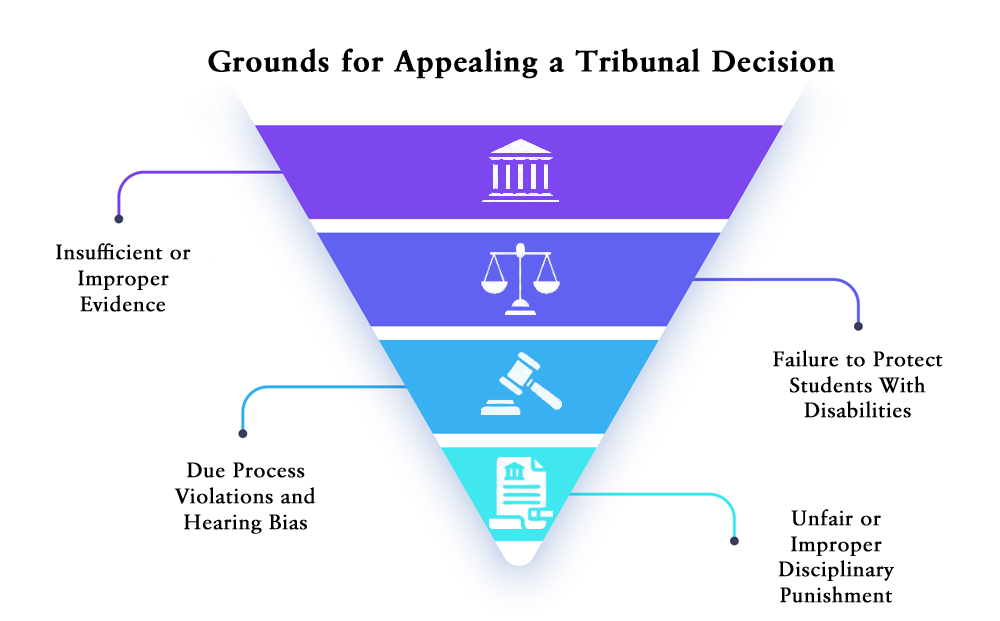
Common Grounds for Appealing a School Tribunal Decision
- Insufficient evidence: The school did not present enough reliable evidence to support its findings.
- Violation of due process: Your child was denied a fair opportunity to respond to accusations, question witnesses, or present a defense.
- Improper use of evidence: The tribunal relied on unreliable hearsay, undisclosed information, or evidence that your child did not have a fair opportunity to challenge.
- Bias or conflicts of interest: The hearing was affected by unfairness, prejudice, or conflicts involving decision-makers.
- Failure to protect students with disabilities: The school failed to follow applicable special education requirements, including protections associated with an Individualized Education Program (IEP) or Section 504 plan.
- Unfair or improper punishment: The disciplinary decision was inconsistent with applicable law, school policies, or the circumstances of the incident.
You Have the Right to Appeal a School Tribunal Decision
If you disagree with a school disciplinary tribunal’s decision, you may have the right to challenge it through an appeal to your local board of education. The board reviews the disciplinary record to determine whether the decision should be upheld, modified, or reversed.
If the local board rules against your child, you may have the right to appeal the decision to the Georgia State Board of Education. Generally, a written appeal must be filed with the local school superintendent within 30 days of the local board’s decision.
Appealing a school disciplinary decision involves strict deadlines, legal procedures, and specific requirements for challenging the evidence, findings, or disciplinary measures imposed. An experienced defense attorney can evaluate the grounds for appeal, identify procedural errors, challenge unsupported findings, and fight to overturn or reduce disciplinary consequences that could affect your child’s education and future opportunities.
Building a Strong Defense at School Disciplinary Tribunal Hearings and Appeals
School disciplinary tribunal hearings can be intimidating, and the consequences can seriously affect a student’s education, school record, and future opportunities. Parents and students should understand their rights and legal options before responding to accusations or making statements that could be used against them.
The juvenile defense attorneys at Zeliff | Watson understand that building a strong defense requires more than simply responding to the school’s accusations. It requires a thorough investigation of the circumstances, careful examination of the evidence, questioning witnesses, identifying inconsistencies, and challenging allegations that are unsupported or unfair.
Zeliff | Watson works to uncover what actually happened, examine the conduct of everyone involved, determine whether school officials conducted a fair and thorough investigation, and identify any failures to follow established policies and procedures.
Throughout the disciplinary process, Zeliff | Watson provides legal representation to challenge the school’s evidence and testimony, present evidence supporting the student’s defense, negotiate for a more favorable outcome, and pursue an appeal when appropriate.
Schedule a Free Case Evaluation
Zeliff | Watson offers free, confidential, no-obligation case evaluations to help individuals understand their legal rights, available options, and potential defenses.
During the consultation, prospective clients have the opportunity to discuss the charges or allegations against them, ask questions, and explain the circumstances surrounding their case. Zeliff | Watson will evaluate the allegations, identify potential weaknesses in the evidence, and explore possible defense strategies.
Following the evaluation, Zeliff | Watson will provide a quote for legal representation.
The consultation is completely free, confidential, and carries no obligation to hire the firm. It provides an opportunity to get answers, understand options they may not have previously considered, and make informed decisions about protecting their rights and future.
A Simple Process to Getting Started

Schedule a Free Case Evaluation
Schedule a free, no-obligation, and confidential case consultation in person, online, or over the phone. This will help you understand how your case can be challenged, potentially leading to a reduction, dismissal, or acquittal of your charges. Click here to schedule your case evaluation.

Meet Our Defense Team and Conduct a Case Evaluation
During your free case evaluation, you’ll have the opportunity to ask questions, receive answers and legal guidance, and collaborate with our attorneys to better understand your side of the story, gather evidence, and devise a strategy to achieve the best possible outcome for your pending criminal charges.

Start Defending Your Case
After your free case evaluation, Zeliff & Watson will assist in preserving evidence and safeguarding your rights, ensuring your protection throughout the process. The defense team will also provide a proposed fee to represent your case, with the goal of achieving the best possible outcome.