

Estimated Read Time: 11-12 Minutes
Navigating the complexities of Georgia law can feel like a daunting journey, but knowledge is the most powerful tool you can have in your corner. By taking the time to understand the clear distinctions between misdemeanors and felonies, the specific definitions of reckless disregard, and the true weight of court mandates, you are moving from a place of uncertainty to a position of strength and clarity. Whether you are exploring the rules of the road or facing charges, staying informed prepares you to handle any situation with confidence and a grounded perspective. Knowledge isn’t just about knowing the rules, it’s about empowering yourself to make the best decisions for your future.
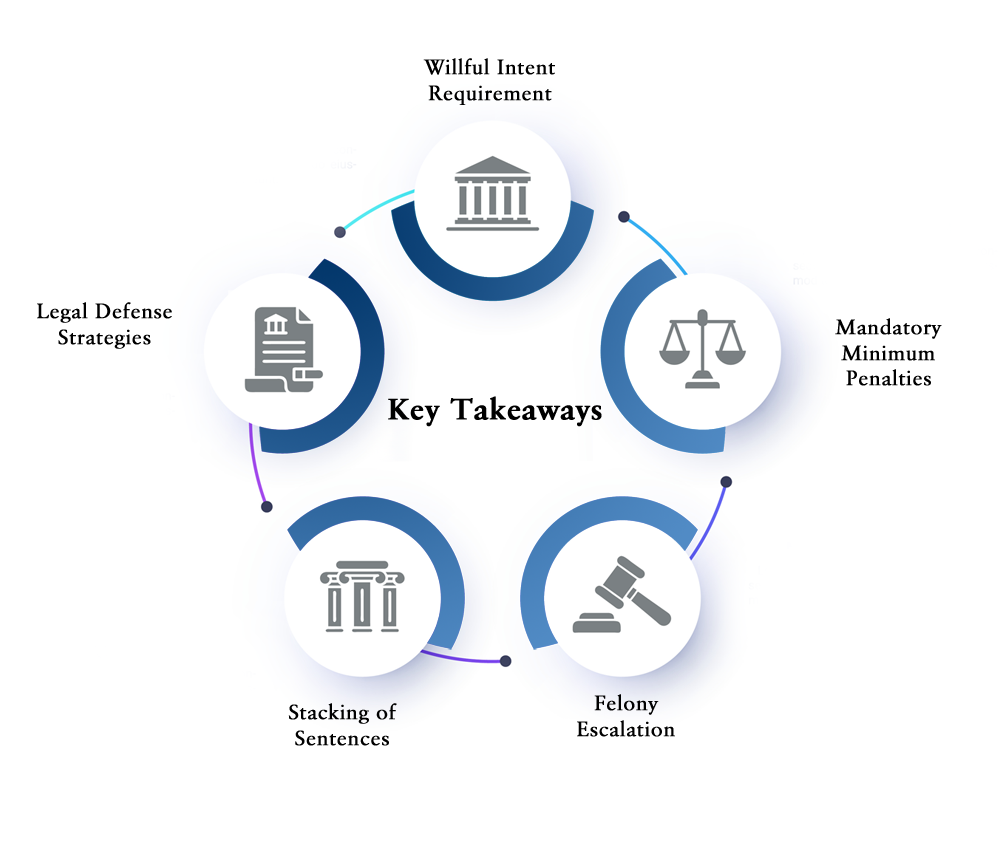
Key Takeaways
Willful Intent Requirement: To secure a conviction, the state must prove you intentionally and willfully refused to stop while aware of a clear signal from a uniformed officer in a marked vehicle.
Mandatory Minimum Penalties: Even a first-time misdemeanor conviction carries strict, mandatory penalties.
Felony Escalation: A charge automatically jumps to a felony if the chase involves speeding over 20 mph, driving under the influence, crossing county lines, or showing reckless disregard for safety.
Stacking of Sentences: Georgia law often requires fleeing sentences to be served consecutively, meaning you must finish your punishment for fleeing before starting any sentences for related crimes like DUI or obstruction.
Legal Defense Strategies: Effective defenses often focus on challenging the willfulness of the act, such as by showing a safe place to stop was available, or on attacking procedural errors, like an officer being out of uniform or in an unmarked car.
Fleeing and Attempting to Elude
While fleeing and attempting to elude and obstructing an enforcement officer both involve trying to get away from the police, Georgia law treats them as distinct crimes with different rules. The main similarity is that both charges require the state to prove you acted willfully, intentionally, or knowingly. This means that if you truly didn’t realize a police officer was trying to stop you, you shouldn’t be convicted of either. Both laws also require that the officer be acting in their official capacity, meaning they must be performing their duties legally for the charges to apply.
Fleeing or Attempting to Elude a Police Officer is a motor vehicle offense. It applies when a driver knowingly fails or refuses to stop a vehicle after being given a visual or audible signal by a law enforcement officer who is in uniform and operating a properly marked patrol vehicle.
For example, a police officer activates their blue lights and siren after observing a driver speeding. Instead of pulling over, the driver accelerates, changes lanes to avoid the officer, and continues driving for several miles. In Georgia, this conduct may result in a charge of Fleeing or Attempting to Elude a Police Officer because the driver knowingly failed to stop after being signaled by law enforcement.
Obstruction of a Law Enforcement Officer, by contrast, is a much broader offense. It is not limited to motor vehicles and can occur in a wide variety of situations. While it is often charged in foot pursuits, it can also involve physically interfering with an officer, providing false information, concealing evidence, or otherwise hindering an officer in the performance of their lawful duties.
For example, a police officer is investigating a disturbance and directs a bystander to step aside while making an arrest. Instead, the individual repeatedly places themselves between the officer and the suspect, ignores lawful commands to move, and interferes with the arrest. In Georgia, this conduct could result in a charge of Obstruction of a Law Enforcement Officer because the individual knowingly hindered the officer’s ability to perform their duties.
In short, fleeing and eluding generally involves refusing to stop a vehicle after a lawful signal from police, while obstruction involves interfering with law enforcement’s duties in virtually any setting, whether on foot, during an investigation, or while an officer is attempting to make an arrest.
Another major difference is how they are punished and how they alter your future. Fleeing and eluding are typically more expensive and carry harsher mandatory penalties. Even a first-time misdemeanor fleeing conviction carries a mandatory $1,000.00 fine and a 30-day minimum jail stay, in addition to an automatic one-year driver’s license suspension. Obstruction charges tend to be more lenient. A simple misdemeanor obstruction charge for running on foot doesn’t carry a mandatory minimum jail sentence or an automatic license suspension, though a judge can still sentence you to up to a year in jail. However, if you get physical or violent during an obstruction, it becomes a felony, which is just as serious as felony fleeing.
In many cases, if you flee in a car and then jump out to run on foot, Georgia prosecutors will charge you with both. This is because the crimes occurred at two different stages: the vehicle stage, which is fleeing, and the foot stage, which is obstruction. Because of the stacking rules in Georgia, these two charges can lead to separate, consecutive sentences, meaning you might have to finish your punishment for fleeing before starting your punishment for obstruction.
Attempting to Flee and Elude a Police Officer
To better understand fleeing and attempting to elude charges, you have to look at it as a four-part checklist. For someone to be found guilty, the state must prove that every single one of these parts happened at the same time. If even one part is missing, for example, if the officer wasn’t in a proper uniform, the charge might not stick in court.
First, there must be a clear command to stop. This can be a visual signal, such as flashing blue lights, or an audible one, such as a siren or a verbal command over a loudspeaker. Second, the law is very strict about who is giving that signal. The officer must be in a formal, appropriate uniform and display their badge clearly. Furthermore, they must be in an officially marked police vehicle. This can be used as a defense in Georgia. If a driver is signaled by an unmarked car or an officer in plain clothes, they might not be legally fleeing because they couldn’t be sure it was a real police officer.
The third part is all about what the driver is thinking. This is the willfulness or intention part of the crime. To be guilty, you have to refuse to stop on purpose. If you genuinely didn’t see the lights or hear the siren for a few moments, you haven’t technically fled yet. The law also includes a specific safety exception: if a driver sees the lights but feels unsafe stopping on a dark, lonely road, they may slow down, turn on their hazard flashers, and keep driving until they reach a well-lit area, such as a gas station. As long as they don’t speed up or try to hide, this is usually seen as complying rather than fleeing.
While the basic charge is a high and aggravated misdemeanor, it can quickly turn into a serious felony if the driver does anything dangerous while trying to get away. The charge can escalate to a felony if the driver goes more than 20 mph over the speed limit, hits another car or a person, or crosses over a state line during the chase. Because felony fleeing carries a mandatory prison sentence of 1 to 5 years that cannot be swapped for probation, these specific details can play a particularly important role in the courtroom.
Stopping Safely
To stay safe and avoid a fleeing charge in Georgia, the most important thing is to show the officer right away that you are planning to stop. Even if you don’t feel safe pulling over exactly where you are, you must act immediately so the officer doesn’t think you are trying to get away.
The moment you see police lights or hear a siren, you should do three things: turn on your hazard lights, slow down, and use your turn signal. Turning on your flashers and slowing down sends a clear message that you see the officer and are looking for a parking spot. The crime of fleeing is about willfully refusing to stop. If you are visibly slowing down and signaling, it will be much harder for the state to argue that you were trying to escape.
It is important to know that you do not have to slam on your brakes in a dangerous spot, such as a blind curve or a narrow bridge. Georgia guidelines generally allow you to keep driving for a short duration to reach a safe area.
After you find a safe spot and park, your goal is to make the officer feel comfortable as they approach your car. You should keep your hands on the steering wheel where they can be seen and turn on your inside light if it is dark outside. Most importantly, stay in your car unless the officer tells you to get out. These small steps can help to prevent misunderstandings and show that you are being fully cooperative.
Obstruction of a Law Enforcement Officer
In Georgia, there isn’t actually a specific law called evading arrest. Instead, the state uses two different laws depending on how a person tries to get away. If you try to escape using a vehicle, it is charged as fleeing and attempting to elude. This requires the officer to be in proper uniform and to be in a marked car. If you try to escape on foot, or if you simply refuse to follow an officer’s lawful command to stop, it is charged as obstruction of a law enforcement officer. Both charges require the state to prove that you knew the person was a police officer and that you intentionally tried to hinder their work.
When it comes to running on foot, the law is broken into two levels. Misdemeanor obstruction happens when you hinder or delay an officer, such as by running away, hiding, or giving a fake name. This can lead to up to 12 months in jail. However, if you struggle, fight back, or threaten the officer while trying to get away, it becomes felony obstruction, which carries a prison sentence of one to five years. For the charge to stick, the officer must have had a legal reason to stop or detain you in the first place, though fighting an officer during an arrest is almost always prosecuted regardless of the reason for the stop.
It is also important to understand the difference between detention and arrest. An officer can detain you briefly if they have reasonable suspicion that you are involved in a crime, and you are generally not allowed to run away during this time. An arrest happens when they have probable cause to take you into custody. In either situation, attempting to evade the officer, whether by car or on foot, is treated as a serious crime in Georgia because it puts both the officer and the public in danger.
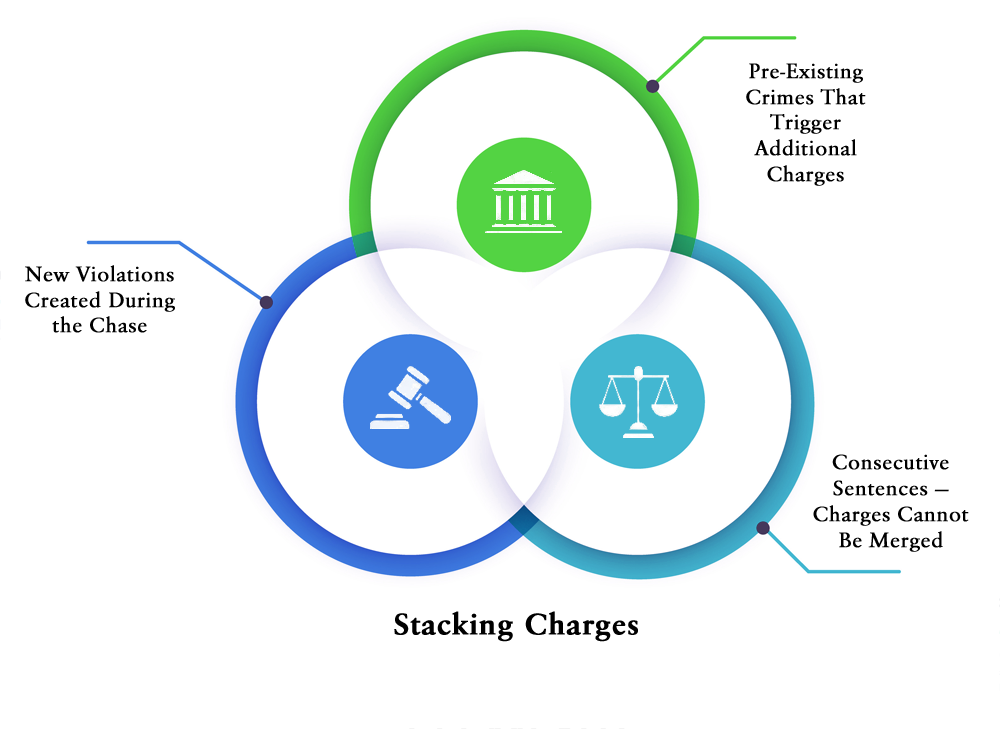
Stacking Charges
It is very rare for someone to be only charged with fleeing and eluding. Typically, the police will stack several other charges on top of it because running away usually involves breaking multiple laws at once. Many people flee because they are already doing something illegal, such as driving under the influence, possessing drugs, or driving on a suspended license, and they might be trying to avoid getting caught for those specific crimes. If you are caught fleeing while under the influence, the fleeing charge might automatically turn into a serious felony.
The chase itself also creates a long trail of new violations. As a driver weaves through traffic or goes over the speed limit to get away, they can be charged with reckless driving, speeding, and failing to stay in their lane. If the driver hits another car or a person and keeps going, they will also face a hit-and-run charge. Additionally, if the driver struggles with the officers or refuses to follow commands once the car finally stops, they can be charged with obstruction of law enforcement.
The most important thing to understand is that Georgia law is very strict about how these crimes are punished. A felony fleeing sentence cannot be combined or merged with your other charges. This means if a judge gives you a year for a DUI and a year for fleeing, you generally have to serve those two years one after the other, rather than at the same time. This stacking of sentences is why a single police chase can be incredibly serious.
Misdemeanor Versus Felony
The difference between a misdemeanor and a felony for fleeing and attempting to elude depends on how dangerous the chase becomes. The basic charge is a misdemeanor of a high and aggravated nature. This applies if you simply refuse to pull over but don’t drive in a way that puts lives at immediate risk. Even as a misdemeanor, the law can be very tough. A first-time conviction may require at least 30 days in jail and a fine of at least $1,000.00. If it is your second or third offense, the jail time increases significantly.
The charge quickly jumps to a felony if you do anything that makes the situation more hazardous. The most common way this happens is by speeding at least 20 mph over the limit during the chase. It also becomes a felony if you hit another car or a person, drive into another state, or drive so recklessly that you put the public in danger. Additionally, if you are fleeing while under the influence of alcohol or drugs, the law automatically treats it as a felony. Prosecutors often look for these specific aggravating factors to seek harsher charges. Once it becomes a felony, the penalties are much more severe.
Reckless disregard is the legal phrase used to describe driving in a way that shows you simply do not care about the safety of other people or their property. This behavior is one of the main triggers that turns a misdemeanor fleeing charge into a serious felony. To prove this in court, a prosecutor doesn’t have to show that you actually wanted to hurt someone. Instead, they only have to show that you were aware of the risks and chose to ignore them anyway. This is often described in court as a conscious indifference to the consequences of your actions.
Common examples of maneuvers that fall under this category include running through red lights or stop signs, weaving aggressively through heavy traffic, or driving the wrong way on a one-way street. Judges will also look into the environment where the chase happened. For example, driving 40 mph in a school zone or a crowded neighborhood can be considered reckless disregard, even if you aren’t going fast enough to trigger the automatic 20 mph over speeding felony rule. Essentially, if the manner of your driving creates a high risk that someone could be seriously injured, the law treats it as a major crime.
The reason this specific definition matters so much is that it allows the state to give you a much harsher punishment. If a jury decides that your driving showed reckless disregard, you are no longer facing a misdemeanor. Instead, you might face a felony conviction, which in Georgia carries a mandatory prison sentence of 1 to 10 years. Because this prison time cannot be suspended or traded for probation, the debate over whether your driving was truly reckless, or just fast, is often the most important part of a fleeing and attempting to elude trial.
FAQ’s
What is the difference between fleeing and obstruction? Fleeing and attempting to elude specifically involves using a motor vehicle to escape a uniformed officer in a marked car, while obstruction is a broader catch-all charge used for foot chases or refusing to follow an officer’s commands.
Can I be charged with a felony if I wasn’t speeding excessively? Yes, a charge can escalate to a felony if you show reckless disregard for safety, such as running red lights or weaving through traffic, or if you hit a person, cross a county line, or drive under the influence.
Will I lose my driver’s license if I am convicted? Yes, even a first-time misdemeanor conviction triggers a mandatory one-year license suspension, and you will likely be required to maintain expensive high-risk insurance for three years to get it back.
License Suspension and Reinstatement
If you are convicted of fleeing and attempting to elude in Georgia, the consequences for your driver’s license have the potential to be severe. Unlike a typical speeding ticket, where you might just pay a fine and move on, this charge triggers a mandatory license suspension. For most drivers over the age of 21, a first-time conviction means losing their license for a full 12 months. While you might be able to get your license back early after 120 days by taking a defensive driving class and paying a reinstatement fee of about $210.00, those under 21 face even tougher rules and may have to wait much longer without any driving privileges at all.
Beyond just the suspension, your official driving record will take a major hit. The Georgia Department of Driver Services can add up to 6 points to your license for the fleeing charge itself. However, because fleeing often involves other violations, such as speeding or reckless driving, those extra tickets can add even more points. If you rack up 15 points within two years, your license gets suspended regardless of the fleeing charge. Additionally, if you are convicted of three major traffic offenses within five years, Georgia will label you a habitual violator, which can result in an automatic five-year license revocation.
Finally, the financial impact on your car insurance is usually the most long-lasting part of the punishment. Insurance companies view fleeing as risky behavior, similar to a DUI. You can expect your monthly insurance bill to drastically increase, and many standard companies might simply choose to cancel your policy. To get your license back, the state will likely require you to file an SR-22 certificate, a special form from your insurance company that proves you have high-risk coverage. You usually have to keep this expensive proof of insurance on file for three years, and if you miss a single payment, the insurance company will tell the state, and your license will be suspended all over again.
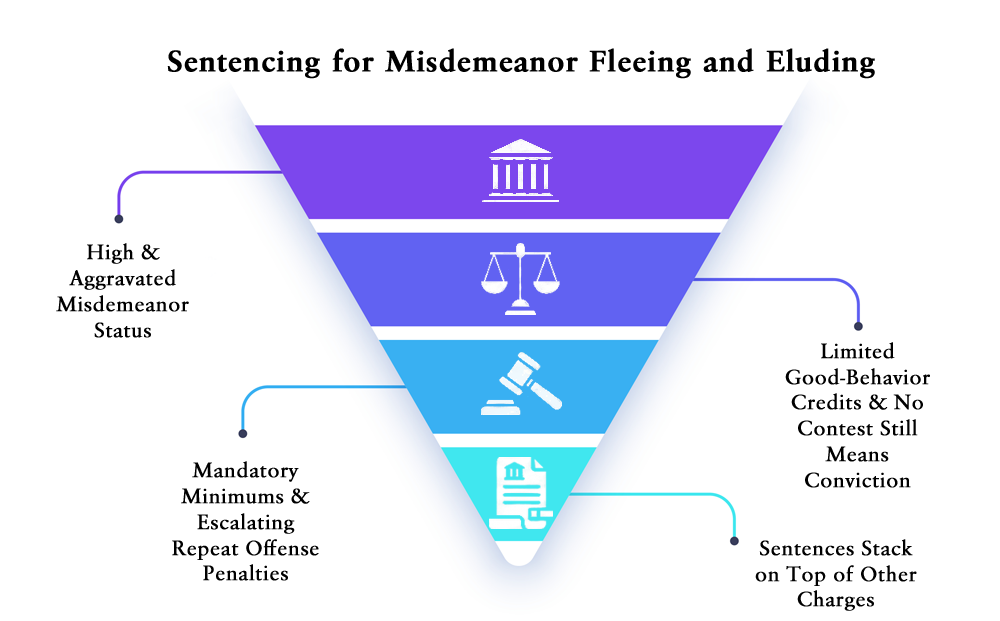
Sentencing for Misdemeanor Fleeing and Eluding
A misdemeanor conviction for fleeing and eluding is much more serious than a standard traffic ticket because it is officially labeled a high- and aggravated-level misdemeanor. This special status means the punishment is strictly set by law and is harder to reduce. For a first-time conviction, the judge might sentence you to a mandatory minimum of 30 days in jail and a fine between $1,000.00 and $5,000.00. These minimums are not optional since the judge generally cannot swap this jail time for probation or a lower fine. If you have been convicted of the same crime before within the last ten years, the penalties become even steeper, jumping to a mandatory 90 days in jail for a second offense and 180 days for a third.
The high and aggravated label also changes how your time in jail is calculated. Normally, people in jail for minor crimes might earn good-behavior credit that lets them out after serving only half their time. However, for this charge, these credits are limited to a maximum of 4 days per month. This means if you are sentenced to 30 days, you will likely serve almost every single one of them. Even if you try to plead no contest, the law still treats it as a full conviction, meaning you will still face the mandatory jail time, the heavy fines, and the automatic one-year loss of your driver’s license.
Finally, it is important to note that these sentences usually stack on other charges. If you were caught speeding or driving recklessly while fleeing, the judge will often require you to finish your jail time for the fleeing charge before you even begin the sentence for the other violations. Between the mandatory jail time, the high fines, the strict release rules, and the loss of driving privileges, even the misdemeanor version of this charge is to be treated seriously.
Fines and Fees for Misdemeanor Fleeing and Attempting to Elude
The total cost of a conviction for a misdemeanor fleeing and attempting to elude charge is much higher than the amount a judge announces in court. For a first-time misdemeanor, while the law sets the base fine between $1,000.00 and $5,000.00, the state adds several mandatory surcharges that function like taxes to fund police retirement, jail construction, and victim assistance. These extra fees can add 35% to 50% to your bill, meaning that a $1,000.00 fine can actually cost you nearly $1,500.00 out of pocket. If the charge is a felony, the base fine starts at $5,000.00, which can push the final court bill toward $7,000.00 or more.
The expenses continue even after you leave the courtroom. To get your driver’s license back once your suspension is over, you must pay a reinstatement fee to the Department of Driver Services of about $210.00. If any part of your sentence is served on probation, you will likely have to pay a monthly supervision fee of $30.00 to $50.00. Additionally, if you were also charged with a DUI during the chase, you will be required to pay roughly $360.00 for a mandatory risk reduction course.
If you cannot afford to pay these high costs, Georgia law provides some built-in relief. A judge has the authority to let you pay your fines through community service if you can prove that paying in cash would cause a significant financial hardship. Usually, every hour of volunteer work at an approved non-profit is worth the current federal minimum wage, though the judge can set a higher rate at their discretion. It is also important to remember that increasing car insurance rates can act as a hidden cost.
Sentencing for Felony Fleeing and Eluding
A felony fleeing and attempting to elude charge is one of the state’s most serious traffic-related crimes due to the involvement of high-risk behaviors, serious injury, or death. While a standard crime is a misdemeanor, the law lists specific aggravating factors that automatically turn the charge into a felony. The most common trigger is speeding more than 20 mph over the limit during the chase, but it also becomes a felony if the driver strikes a pedestrian or another vehicle, crosses a county or state line, or drives with a reckless disregard for safety, such as running red lights or driving on sidewalks. Additionally, fleeing while under the influence of alcohol or drugs is an automatic felony.
The punishment for a felony conviction is severe and much harsher than that for a misdemeanor. If convicted, you face a mandatory prison sentence of 1 to 10 years and a fine between $5,000.00 and $10,000.00. One of the most critical aspects of the law states that the prison sentence cannot be suspended or traded for probation. This means that, unlike many other crimes, in which a first-time offender might avoid prison on probation, a person convicted of felony fleeing is typically required to serve at least one year in prison.
Beyond the prison time and heavy fines, a felony conviction has long-lasting effects on your life and finances. Your driver’s license is automatically suspended for at least one year, and you will likely be labeled a habitual violator if you have other serious driving offenses on your record. Because the law also requires that felony fleeing sentences be served consecutively, the time you spend in prison will be added to the end of any other sentences you receive for crimes like DUI or reckless driving. Financially, you can expect to pay thousands in court surcharges and see your car insurance rates skyrocket for several years after you are released.
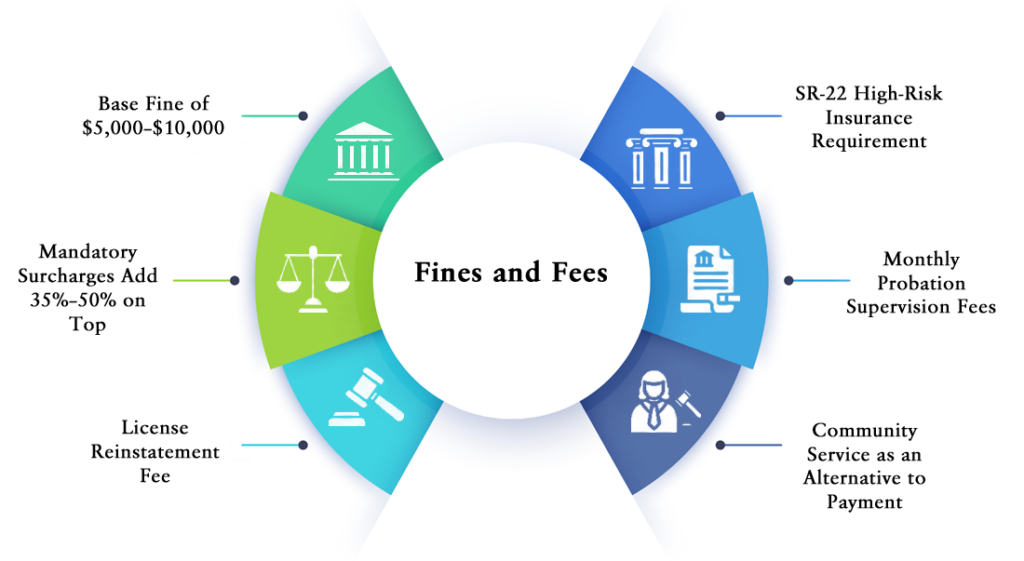
Fines and Fees for Felony
The financial cost of a conviction for felony fleeing and attempting to elude is extremely high because the law requires large base fines, and the state adds extra fees on top of them. The judge is required to set a base fine between $5,000.00 and $10,000.00. However, the amount you actually pay is much higher because Georgia adds mandatory surcharges to fund things like police retirement, jail improvements, and victim assistance programs. These surcharges typically add 35% to 50% to the base fine, meaning a $5,000.00 fine could easily end up costing you more than $7,000.00 in total.
The expenses do not end there. If your sentence involves a license suspension, you will have to pay a reinstatement fee of about $210.00 to the Department of Driver Services to get your license back. You will also likely be required to pay for high-risk car insurance known as an SR-22 for three years, which can substantially increase your insurance bills. If you are placed on probation, you will also have to pay a monthly supervision fee, usually between $30.00 and $50.00.
If you are unable to pay these thousands of dollars in fines, a judge might let you work off your debt through community service. By law, one hour of community service is usually worth the federal minimum wage, though some local courts may credit you at a slightly higher rate. While this can help you pay the debt, it would take many hundreds of hours of volunteer work to pay off a felony-level fine. Because the financial impact is so large and the felony charge carries a strict statutory prison range of 1 to 10 years that cannot be easily probated or deferred, this is considered one of the most expensive and life-altering traffic-related crimes in the state.
Potential Defenses
Being charged with Fleeing and Eluding does not automatically mean you will be convicted. Potential defenses often depend on the specific facts of the case and may include:
- Lack of Intentional Flight: The State must prove the driver knowingly and intentionally failed to stop. In some situations, a driver may not have realized law enforcement was attempting to stop them due to traffic conditions, distractions, confusion, or a medical issue.
- Emergency or Necessity: A driver may have continued driving because of a legitimate emergency, such as seeking medical care, avoiding danger, or attempting to reach a safer location before stopping.
- Misunderstanding or Confusion: A driver may have reasonably believed the officer was stopping another vehicle, may not have recognized an unmarked police vehicle, or may have been trying to find a safe place to pull over.
Every case is unique, and the availability of these defenses depends on the specific circumstances and evidence involved.
Schedule a Free Case Evaluation
If you have been charged with fleeing and attempting to elude a police officer, it is important to understand that an arrest is not the same as a conviction. The facts surrounding these cases are often more complex than they initially appear, and the outcome can depend on details that are not immediately obvious from a police report.
Zeliff | Watson offers free, no-obligation case evaluations to help you better understand your situation and your legal options. During the consultation, we will discuss the circumstances of the alleged incident, review the facts of the traffic stop, answer your questions, and identify any potential defenses that may be available in your case.
Everything you share during the evaluation is protected by attorney-client privilege, meaning your information remains confidential and cannot be disclosed under Georgia law. This allows you to speak openly about what happened and receive honest feedback about your case.
After reviewing the facts, we will explain our initial assessment, discuss possible defense strategies, and outline what representation would involve moving forward. There is no cost for the consultation and no obligation to hire our firm. It is simply an opportunity to gain clarity about your case and determine whether Zeliff | Watson is the right fit for you.
A Simple Process to Getting Started

Schedule a Free Case Evaluation
Schedule a free, no-obligation, and confidential case consultation in person, online, or over the phone. This will help you understand how your case can be challenged, potentially leading to a reduction, dismissal, or acquittal of your charges. Click here to schedule your case evaluation.

Meet Our Defense Team and Conduct a Case Evaluation
During your free case evaluation, you’ll have the opportunity to ask questions, receive answers and legal guidance, and collaborate with our attorneys to better understand your side of the story, gather evidence, and devise a strategy to achieve the best possible outcome for your pending criminal charges.

Start Defending Your Case
After your free case evaluation, Zeliff & Watson will assist in preserving evidence and safeguarding your rights, ensuring your protection throughout the process. The defense team will also provide a proposed fee to represent your case, with the goal of achieving the best possible outcome.