

Arrests Made in Forsyth County, Cumming, and Johns Creek
Navigating the jail release and bond process at the Forsyth County Jail can feel overwhelming, especially when a friend or loved one has been arrested. The good news is that understanding how the system works can help you avoid unnecessary delays and secure a release as quickly as possible. This guide walks you through every step of the process, from arrest and booking at the Forsyth County Jail to obtaining a bond and bringing your loved one home as quickly as possible.
Arrest and Transport
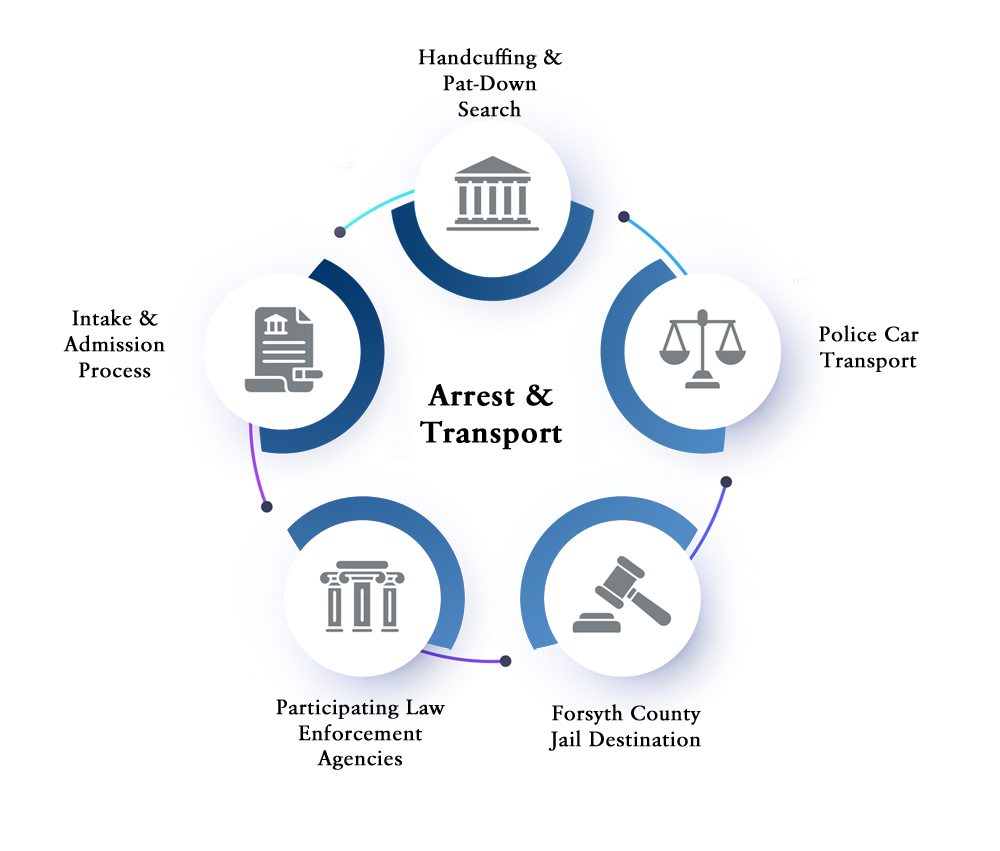
The moment a law enforcement officer decides to make an arrest, a chain of events begins. For safety reasons, the officer will immediately place the individual in handcuffs with their hands secured behind their back. Next, the officer will perform a thorough pat-down search of their clothing to ensure they are not carrying any weapons or illegal items.
Once the initial search is finished, the individual is placed in the back seat of the police car for the drive to the jail.
Everyone arrested by participating agencies is typically transported to the same facility. The official address is:
202 Veterans Memorial Blvd Cumming, GA 30040. The Forsyth County Jail serves as the primary detention facility for several law enforcement agencies throughout the region. In addition to housing individuals arrested by the Forsyth County Sheriff’s Office and the City of Cumming Police Department, the facility also houses inmates arrested by the Johns Creek Police Department and Sandy Springs Police Department.
Arrival
When the police car arrives at the Forsyth County Jail, the officer leads the handcuffed individual into the building’s intake room and hands over the arrest paperwork. Jail staff carefully review these documents to ensure all information is accurate and legally valid before officially admitting the person to the facility. Once the paperwork is completed, the arresting officer’s job is finished, and jail staff take full responsibility for the individual, placing them in a temporary holding cell until the official booking and fingerprinting process begins.
Booking Process
The official booking process begins as soon as someone enters the jail intake area and must be completed before they can be released on bond. First, jail staff perform a detailed safety search to remove all personal items, such as cell phones, wallets, jewelry, belts, and shoelaces. Any cash the person has on them is carefully counted, logged, and placed in a secure jail account for safekeeping, which can later be used to pay a cash bond.
Next, the individual meets with a jail nurse for a brief medical and mental health screening to check vital signs, review any necessary prescription medications, and ensure they are physically able to remain at the facility. The medical screen will also include a pregnancy test for females and a TB test for everyone.
Once cleared by medical staff, the individual moves to a computer station, where deputies record their biographical information, including their full name, address, and any identifying marks, such as tattoos. Deputies also take standard booking photographs from the front and side. Most people know these photographs as mugshots.
Finally, the individual’s fingerprints are scanned digitally and sent to state and federal databases to verify their identity and check for any outstanding warrants from other jurisdictions. This entire background check must be completed before the booking process is considered finished, meaning the individual is finally eligible for release on bond.
How to Locate an Inmate
If you believe a friend or family member has been arrested, you can easily check whether they are in jail and how much their bond is. The fastest way to do this is to use the Forsyth County Inmate Search website. By simply typing in their first and last name, you can view their booking photo, the exact list of charges against them, and the total amount required to secure their release.
If you do not have internet access, or if their name is not showing up online yet, you can call the Forsyth County Jail directly at (770) 781-2226. The staff on duty can tell you whether your loved one is there, whether they are still being processed, and what their bond conditions are, so you can begin planning for their release.
Bonds Explained
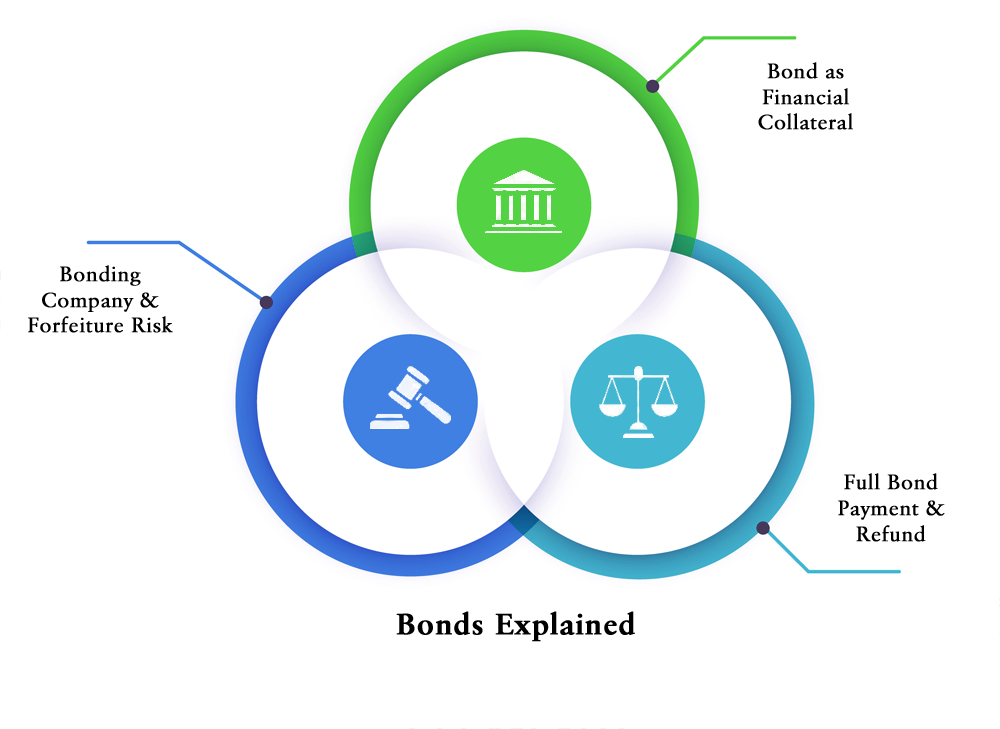
To get someone out of jail, a court typically sets a bond amount, which serves as financial collateral to help ensure the defendant returns for future court appearances. If a defendant posts the full bond in cash or by credit card directly with the court, that money is generally returned at the conclusion of the case if they attend all required court dates. However, if they cannot afford the full bond amount, a bonding company can be used. Under either method, if the defendant fails to appear in court, the bond is forfeited, and the money or collateral used to secure their release can be permanently lost. In some cases, a defense attorney may personally go to the jail to help facilitate a client’s bond and expedite the release process.
Setting the Bond Amount
Once the jail finishes processing an individual, a clear dollar amount for bond is set. For minor offenses like traffic tickets or simple misdemeanors, the jail uses a pre-set price list.
For example, many charges, including DUI, have pre-authorized bond amounts already established by the jail (also known as a bond schedule). Once the booking process is complete, a defendant charged with an offense that has a scheduled bond amount can often secure release without appearing before a judge. DUI charges are subject to a mandatory six-hour holding period before bond can be posted. For most other charges, the time it takes to bond out largely depends on how busy the intake staff is and how quickly the booking and processing procedures can be completed.
However, if the charges are more serious, such as a felony or a family violence offense, the jail cannot automatically assign a bond amount. Instead, the individual must remain in custody until appearing before a judicial officer at a first-appearance hearing. By law, this hearing must occur within 48 hours if the person was arrested without a warrant, or within 72 hours if the arrest was made pursuant to a pre-existing warrant.
It is important to note that if the arrest involves a domestic or family violence dispute, the defendant generally cannot post a standard pre-set bond at the jail and must remain in custody until a judge conducts a first appearance hearing and sets specific bond conditions. Additionally, depending on the county’s judicial resources and court schedule, someone arrested on a Saturday may have to wait until Monday to appear before a judge.
For more serious crimes, the judge will often impose bond conditions, such as no-contact orders, firearm surrender requirements, and other restrictions that must be strictly followed while the case is pending.
First Appearance Hearings
A first appearance hearing is a brief, official meeting with a judge to ensure that an arrested person’s basic legal rights are protected immediately after being taken to jail. In Forsyth County, these hearings take place Monday through Saturday, typically within 24 hours of booking. Instead of going to a regular courthouse, the individual stands in front of a live video camera inside the jail, while a magistrate judge speaks to them from a separate location. Family members are not allowed in the jail video room, but they can watch the live broadcast from a designated public viewing monitor inside the jail lobby.
It is very important to understand that this hearing is not a trial. As such, the judge will not hear evidence, allow anyone to explain what happened, or decide whether the person is guilty or not guilty. When the individual’s name is called, they stand in front of the screen, and the judge reads the exact legal charges against them to make sure they understand what they are being accused of. The judge will then explain their constitutional rights, including the right to remain silent and the right to an attorney. If they cannot afford a private lawyer, the judge will hand them paperwork to apply for a court-appointed public defender.
Next, the judge will decide whether a bond can be set. Under Georgia law, a magistrate judge is prohibited from setting bond for the most severe crimes, such as murder or armed robbery and certain drug possession and drug trafficking charges. For those charges, the individual must remain in jail until a higher-court judge can hear the case. For all other charges, the judge considers four main factors to determine a fair bond amount: whether the person is likely to flee, whether they pose a danger to the community, whether they might commit further crimes, and whether they might threaten witnesses.
If the judge grants a bond, they will specify the amount and often impose strict rules to be followed upon release. These rules can include mandatory check-ins with a pretrial officer, staying completely away from an alleged victim, or taking regular drug and alcohol tests. Finally, the judge will give them a date for their next required court appearance.
Bond Procedures
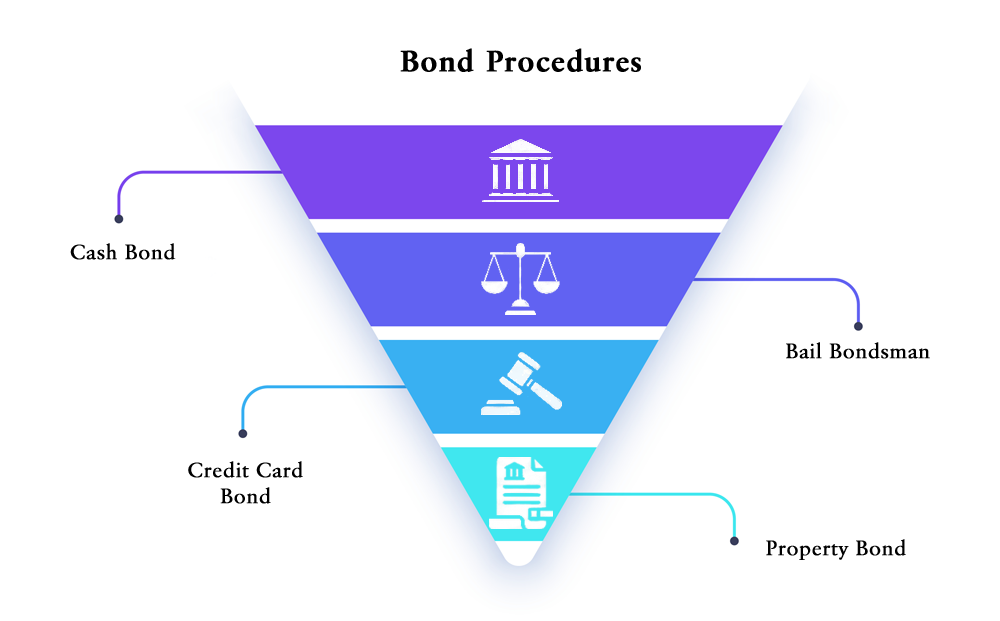
Once a judge has set a bond amount, family members, friends, and loved ones can take the necessary steps to secure the individual’s release. To finalize the release, you will have to choose one of four primary ways to post bail.
The first option is a cash bond, which requires payment of the full bail amount directly to jail staff. In Forsyth County, the jail lobby window accepts cash only for this type of bond. This is important to remember because personal checks will all be rejected. The primary advantage of a cash bond is that once the court case is completely resolved, the full bond amount will be refunded, provided the defendant appears for every scheduled court date.
The second option is to post the full bond amount using a credit card. This payment can be made by either the inmate or a friend or family member at the jail. The fee is only 10% of the bond amount, compared to the 15% typically charged by a bonding company. The credit card holder becomes the surety, essentially acting as their own bondsperson. For most people, this has become the fastest and most cost-effective bonding option available.
The third option is to use an approved bonding company, often called a bail bondsman. If you cannot afford to pay the entire cash bond amount on your own, you may hire a private, licensed bonding agency approved to operate in Forsyth County. Under Georgia law, these companies may charge a non-refundable fee of up to 15% of the total bond amount in exchange for assuming the risk of the bond. This fee is how the bondsman gets paid, and you will not get this money back.
Local residents with a Georgia driver’s license, a local address, and/or a qualified cosigner are typically considered lower risk and can often obtain a bond for the standard 15% fee. For out-of-state defendants, bonding companies frequently require collateral equal to the full bond amount. This provides the company with protection in the event the defendant fails to return to Georgia for court.
The fourth option is a property bond, which allows you to use the equity in your real estate as collateral to secure a defendant’s release from jail. This is the least common bonding option and is generally reserved for cases involving very high bond amounts, such as $30,000, $50,000, $100,000, or more.
To qualify, you must provide certified property records from the tax assessor’s office and demonstrate sufficient equity in the property. In most cases, the required equity must be roughly double the bond amount. For example, a $100,000 bond may require approximately $200,000 in available equity. If approved, the court will place a lien against the property to secure the bond.
Property bonds typically take several additional business days to process and are not commonly pursued due to the extensive paperwork, longer timeline, and the risk of placing your home or other real estate at stake if the defendant fails to appear in court.
Release and Conditions
Once the bond is fully approved and paid, the final step is the physical release from jail. This step is not immediate and typically takes several hours or longer because jail staff must complete a series of mandatory safety checks. First, deputies retrieve the individual’s personal belongings from storage, and the individual must sign a form confirming that all their items, such as their phone and wallet, have been returned. They are then allowed to change out of their jail uniform and back into their regular clothes. Right before they are allowed to leave, deputies must run one last background check through state and national databases. This is a strict safety requirement to ensure that no other county or state has issued a new warrant for their arrest while they were sitting in jail. This overall wait time can also slow down if you post bond right during a jail shift change, during inmate meal times, or if the jail goes into a sudden security lockdown.
The very moment your family member or friend walks out of the secure doors into the main lobby, they will be handed a packet of critical legal paperwork that they must keep safe. This packet includes an official notice with their next mandatory court date, usually for a hearing called an arraignment. Missing this court date is highly serious. It can cause the judge to issue an immediate warrant for their re-arrest, and you will lose all the cash or property you put up for their bond. The packet will also outline any strict special conditions of bond that the judge ordered during their hearing, such as staying completely away from an alleged victim or checking in regularly with a pretrial officer. These rules go into effect the absolute second they step outside, and violating any of them will result in their bond being revoked and them being sent straight back to jail.
Special Considerations for DUI Arrests
When you are released from jail, you will receive a bond sheet. At the bottom of the form, you will find a court date, although it may simply say “TBD” (To Be Determined).
Be sure to check the upper right corner of the bond sheet. If “DUI” is marked, the date listed is typically a DUI Review Hearing rather than a standard arraignment. This hearing can have significant consequences for your case, so it is important to speak with an attorney as soon as possible. If you were arrested in Johns Creek or Sandy Springs, the court date from your citation should generally carry over to the bond sheet.
Most importantly, if you were given a Form 1205 (Georgia’s driver’s license suspension notice), you have a very short deadline to challenge the suspension and protect your driving privileges. Missing this deadline can result in an automatic license suspension. Because these deadlines are strict and time-sensitive, contacting an attorney immediately to discuss and file any necessary appeal is critical to preserving your ability to drive.
Next Steps
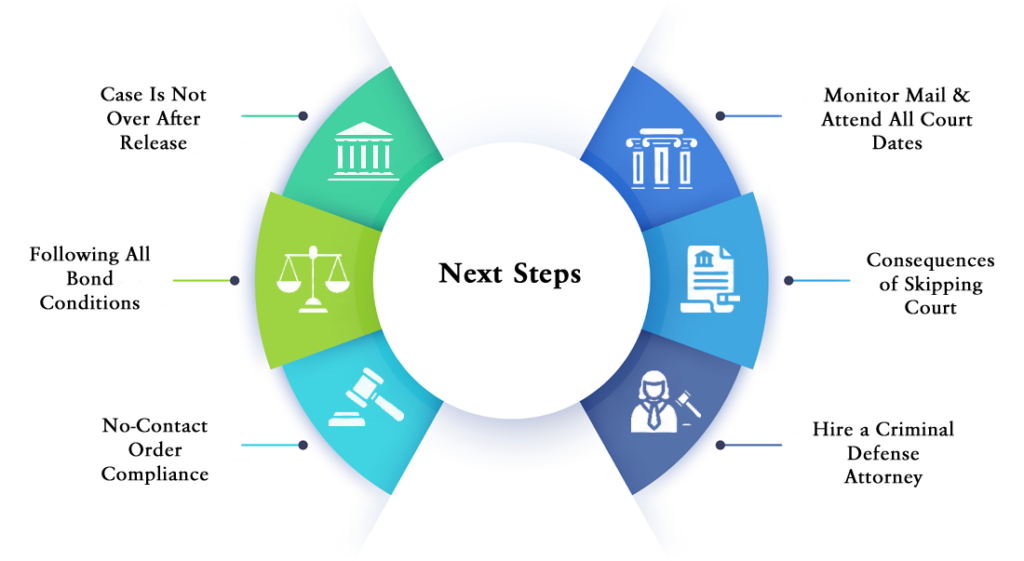
Once a loved one is released, it is important to remember that their case is far from over. Being out on bond simply means they are allowed to wait for their upcoming court dates at home rather than in jail. It is critical that after release, every single condition the judge set is followed. If the judge ordered the defendant to check in with a pretrial officer, wear a GPS or alcohol monitor, or submit to random drug tests, the defendant must do so exactly when told. Furthermore, if the arrest involved a domestic dispute, the judge likely issued a strict no-contact order. This means the defendant cannot call, text, message on social media, or visit the other person under any circumstances, even if that person reaches out first or says everything is fine. Violating these conditions, even by accident, will result in the police putting them right back in jail.
During this time at home, you must closely monitor the mail for an official court notice notifying you of the next court appearance. This letter will be sent to the address given to the jail during booking, so if the defendant moves, they must notify the court clerk in writing immediately. Missing any scheduled court appearances will have severe consequences. If the defendant skips a court appearance, the judge can issue an immediate warrant for their re-arrest, and the bond money or property used to get them out will be completely lost. If you used a bonding company, they will hire bounty hunters to find the defendant, and they can sue you for the remaining balance. To avoid these issues and help navigate the complex legal system, one of the smartest steps you can take right after release is hiring a criminal defense attorney or applying for a public defender.
Many people make the mistake of not speaking with legal counsel immediately after an arrest. Waiting to get legal advice can lead to unnecessary time in jail, bond amounts that are set too high, denied bond requests, and less favorable outcomes in the criminal case. In many situations, important decisions are made during the first few days after an arrest, and having an attorney involved early can make a significant difference.
Denied Bond
In some situations, a judge will deny bond for a variety of reasons. When this happens, a defense attorney can immediately file a motion for bond with the Superior Court. This formal legal request asks a Superior Court judge to review the case and determine whether bond should be granted and, if so, under what conditions. Filing the motion is necessary because, in many Georgia cases, a magistrate judge either does not have the legal authority to set bond or has denied bond based on the circumstances of the case.
After the motion is filed, the court will schedule a bond hearing where the defense attorney can present evidence and arguments supporting the defendant’s release. This is a common step in Georgia, particularly when the defendant is charged with a serious offense, has another pending felony case, is on felony probation or parole, or is being held on a probation or parole hold.
Schedule a Free Case Evaluation
An experienced defense attorney can often help secure a faster release from jail, advocate for a lower bond amount, or seek the removal of unnecessary bond conditions. A defense attorney can immediately begin a full-scale private investigation, start gathering and presenting evidence, and file motions before your next court appearance. Taking these proactive steps early in the process can positively influence how prosecutors and judges view the case and can positively change the trajectory of your case.
For most people, the best-case scenario is to have the charges dismissed or reduced and to avoid a permanent criminal conviction on their record.
If you or someone you care about has been arrested and needs legal guidance, Zeliff | Watson offers a free, no-obligation case evaluation. This confidential consultation gives you the opportunity to speak directly with an experienced defense attorney, discuss the facts of your situation, and gain a clear understanding of your legal options.
During the consultation, our team will listen to your concerns, ask questions to better understand the circumstances of the case, and answer any questions you may have. The meeting is protected by attorney-client privilege, meaning the information you share remains confidential under Georgia law.
After evaluating your situation, we can outline potential defense strategies and explain how we may be able to help. There is no cost for the consultation and no obligation to hire our firm. It’s simply an opportunity to get trusted legal advice and determine whether Zeliff | Watson is the right fit for you and your family.
A Simple Process to Getting Started

Schedule a Free Case Evaluation
Schedule a free, no-obligation, and confidential case consultation in person, online, or over the phone. This will help you understand how your case can be challenged, potentially leading to a reduction, dismissal, or acquittal of your charges. Click here to schedule your case evaluation.

Meet Our Defense Team and Conduct a Case Evaluation
During your free case evaluation, you’ll have the opportunity to ask questions, receive answers and legal guidance, and collaborate with our attorneys to better understand your side of the story, gather evidence, and devise a strategy to achieve the best possible outcome for your pending criminal charges.

Start Defending Your Case
After your free case evaluation, Zeliff & Watson will assist in preserving evidence and safeguarding your rights, ensuring your protection throughout the process. The defense team will also provide a proposed fee to represent your case, with the goal of achieving the best possible outcome.