

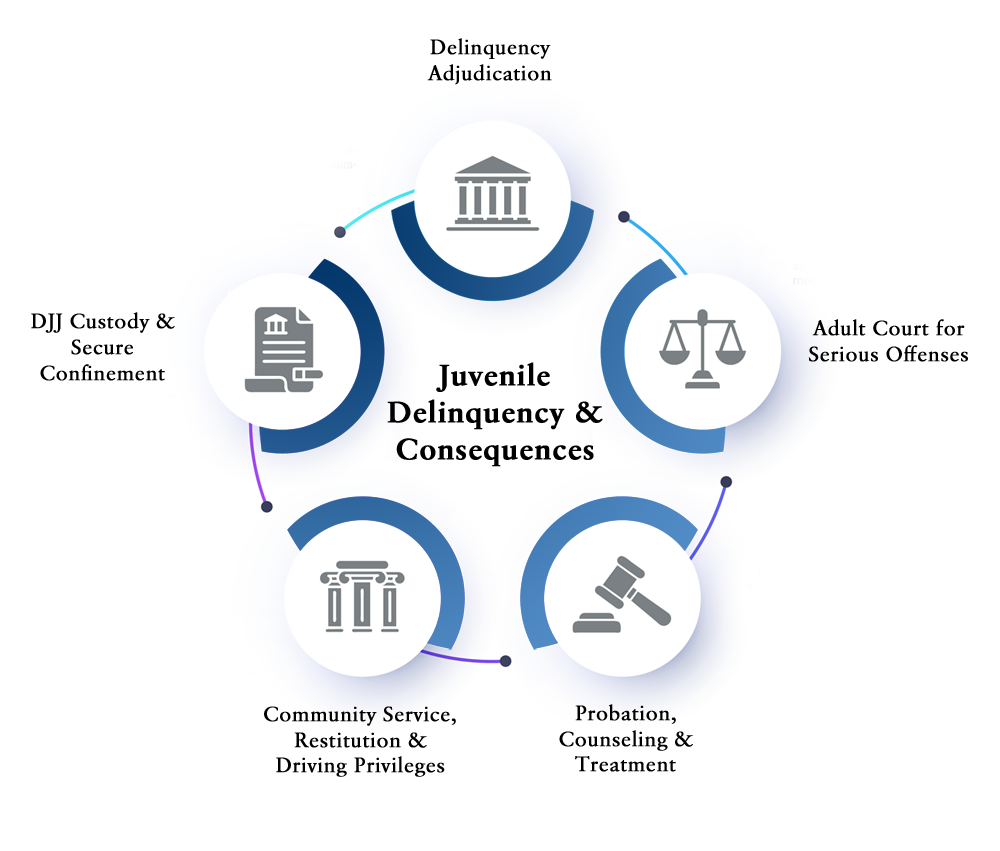
In Georgia juvenile court, a child is not usually “convicted of a crime” the way an adult is. Instead, the offense is called a delinquent act. If the child admits to it or the judge decides the State proved the case beyond a reasonable doubt, the child is adjudicated delinquent. In plain English, that is the juvenile court version of being found guilty, even though it is not technically a criminal conviction.
Some very serious offenses committed by children ages 13 to 17 can be handled in adult court instead.
A juvenile case can still have serious consequences. Depending on the offense, a child could face probation, counseling or treatment, community service, restitution, loss of driving privileges, or placement in the custody of the Georgia Department of Juvenile Justice (DJJ). In serious cases, a child can be taken away from home and confined in a secure juvenile facility.
Class A Designated Felony Acts
These are some of the most serious offenses handled in Georgia juvenile court. A child can potentially be placed in DJJ custody for up to 5 years. Depending on the offense and the judge’s decision, some or all of that time can involve confinement in a secure juvenile facility. The child may also face intensive supervision after being released.
Class B Designated Felony Acts
These are also serious offenses, but the possible confinement is generally shorter. A child can potentially be placed in DJJ custody for up to 3 years, with up to 18 months in a secure juvenile facility. The remaining time may involve a less restrictive placement, probation, or supervision after release.
Other Juvenile Offenses
Most juvenile cases do not automatically mean confinement. Depending on what happened, the child’s history, and the seriousness of the allegations, the judge may order probation, counseling, treatment, community service, restitution, supervision, or another alternative that allows the child to remain in the community.
The consequences can also follow a child after the case is over. A juvenile record may create problems involving school, college, military service, certain careers or licenses, security clearances, and future encounters with the justice system.
That is why one of the most important goals in a juvenile case is often finding a way to resolve the case without an adjudication of delinquency or confinement whenever possible. Options such as diversion, informal adjustment, or dismissal may help protect a child’s freedom, record, and future.
At Zeliff | Watson, our focus is defending your rights, relieving the anxiety that comes with juvenile court proceedings, and securing the best possible resolution. We work to safeguard your child’s future, freedom, and dignity by aggressively seeking outcomes that keep an adjudication of delinquency off their record.
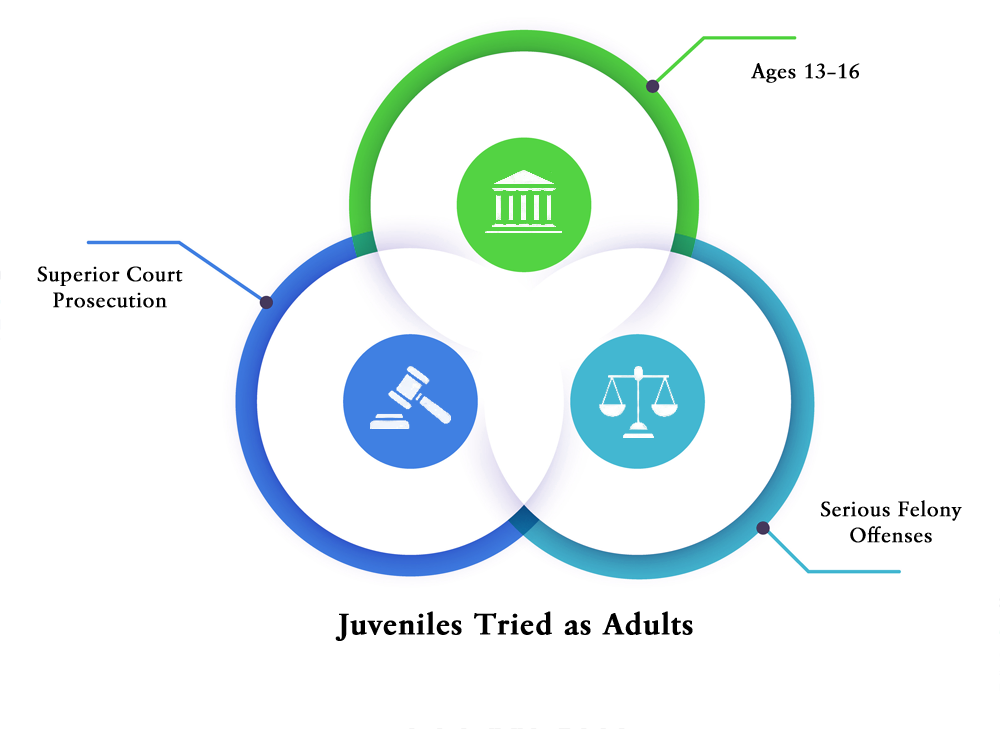
Under Georgia law, a person is generally considered a juvenile if they are under 17 years old at the time of an alleged offense. Most cases involving children under 17 are handled in the juvenile court system, including many traffic violations committed by 16-year-olds. However, certain serious violent felony charges involving juveniles ages 13 to 16 fall under the jurisdiction of adult superior court.
This means that if your child is under 17 and accused of violating Georgia law, their case will typically be handled in juvenile court rather than adult criminal court.
The Forsyth County Juvenile Court is currently comprised of two judges, along with a full-time assistant district attorney responsible for filing and disposing of cases involving delinquent conduct or traffic violations.
Some of the most common juvenile offenses Zeliff | Watson handles include:
- Shoplifting and theft
- Marijuana and drug possession
- Underage drinking and alcohol offenses
- Simple assault and fighting
- Battery
- Disorderly conduct
- Criminal trespass
- Vandalism and property damage
- Burglary
- Weapons offenses
- Traffic offenses
- DUI
- Reckless driving
- Fleeing or attempting to elude
- Sexual offenses
- School-related offenses, including fighting, threats, weapons, and drugs
When Juveniles Are Prosecuted as Adults
Although most juvenile offenses are handled in juvenile court and proceed very differently from adult criminal cases, some serious offenses can result in a child being prosecuted as an adult. In Georgia, minors can potentially face prosecution in Superior Court for certain serious crimes, including murder, armed robbery with a firearm, and certain aggravated sexual offenses. These cases can expose a young person to much more serious consequences than those typically imposed in juvenile court.
Accusations Against Juveniles
Unlike an adult criminal case, where a person may be formally charged through an indictment, accusation, or other charging document, juvenile cases use a Petition to formally bring allegations before the juvenile court. Although the terminology and process are different, the basic purpose is similar. The Petition tells the child and their family what the child is accused of doing and what Georgia law they are alleged to have violated.
The Petition
A Petition is the formal legal document filed in juvenile court that lays out the specific allegations against a child. It identifies the Georgia law the child is alleged to have violated and provides a brief description of the underlying facts and circumstances. It is not an exhaustive police report containing every detail of the case, but rather the official document used to bring the allegations before the court.
The Petition is a verified document, meaning someone with knowledge of the case, such as an intake officer, law enforcement investigator, or complaining witness, has sworn that the contents are true to the best of their information and belief. Unlike many civil court proceedings, you do not need to file a formal written answer to prevent a default judgment. The allegations are addressed as part of the juvenile court proceedings.
The Summons and Process
Along with the Petition, you will generally receive a Summons and Process directing you and your child to appear in juvenile court on a specific date, time, and location. At the initial court appearance, the child is advised of their legal rights and the allegations against them. Depending on the case and the stage of the proceedings, the child may admit or deny the allegations, or the parties may discuss a possible resolution, such as an informal adjustment or diversion program.
The Right to an Attorney
Because the consequences of a juvenile case can be serious, a child has the right to an attorney at critical stages of the proceedings. The family may hire a private juvenile defense attorney or, if financially eligible, request a court-appointed attorney. If you plan to request a court-appointed attorney, contacting the juvenile court clerk or local indigent defense office before the scheduled hearing can help ensure the application process is completed in time.
An Accusation Does Not Mean Your Child Broke the Law
Most importantly, an accusation is just that, an accusation. It does not mean your child committed a crime or broke the law. Stories can get mixed up, witnesses can be mistaken, evidence can be misunderstood, and young people are sometimes blamed for things they did not do.
Getting a skilled juvenile defense attorney involved early can make an important difference. An attorney can conduct an independent investigation, speak with witnesses, gather evidence, and uncover information that contradicts or provides important context to the version of events presented by law enforcement. The goal is to make sure the court hears the full story before decisions are made that could affect your child’s future.
Avoiding a Juvenile Adjudication
With a skilled juvenile defense attorney involved early, there may be several ways to keep an accusation from resulting in a delinquency adjudication. The best approach depends on the allegations, the evidence, the juvenile’s history, and the circumstances surrounding the case.
Some of the more favorable outcomes may come through different tactics and defense strategies.
Present Evidence That Contradicts the Accusation
An attorney can investigate what actually happened and present witnesses, videos, messages, records, or other evidence that contradicts the accusation. In some cases, this can stop the case from moving forward.
Get the Case Dismissed
If the evidence is weak, witnesses are unreliable, or there are other problems with the case, the defense can push to have the allegations dismissed.
Informal Adjustment
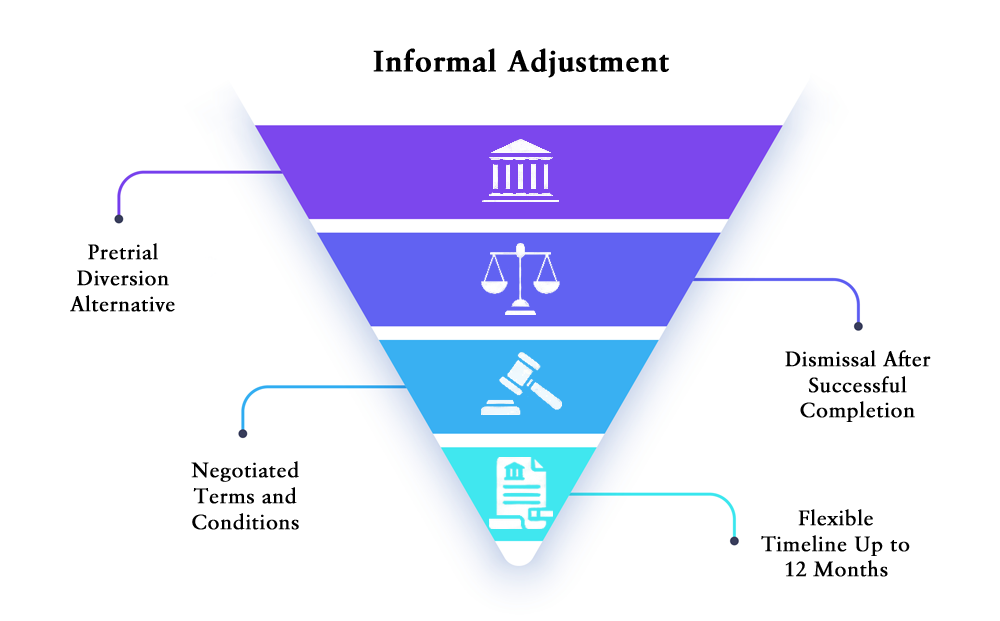
A juvenile court prosecutor does have the authority to enter an “informal adjustment” of a child’s case. The best way to describe this informal adjustment process is that it is very similar to what Georgia criminal courts refer to as pretrial diversion. The prosecutor and defense attorney generally negotiate terms and conditions, which can include everything listed above (supervision, drug testing, counseling, license or permit consequences, etc.) and if the child is successful in following through with the conditions, the case is then dismissed. If available, an informal adjustment is oftentimes the most preferred method of resolving the allegations against a child since it gives guarantees and assurances of the outcome and an eventual dismissal of the charges. Timelines for informal adjustment are flexible and negotiable, up to 12 months.
Nolle Prosequi
The prosecutor may decide not to continue prosecuting the case. In simple terms, the State chooses not to move forward with the allegations.
Hold the Case in Abeyance
Instead of moving forward with the case immediately, the court or prosecutor may essentially put it on hold while the juvenile completes certain requirements. Successful completion may allow the matter to end without formal adjudication.
Divert or Withhold the Complaint
Rather than formally prosecuting the juvenile, the case may be diverted away from the traditional court process while the juvenile completes certain conditions or services.
Mediation
Some cases may be resolved through mediation, where the parties work toward an agreement without taking the case through a contested adjudication hearing.
Challenge the State’s Evidence
A defense attorney may challenge an illegal search, an improperly obtained statement, unreliable identification, questionable testing, or other evidence. If important evidence cannot be used, the State’s case may become significantly weaker.
Negotiate a Lesser Resolution
When completely dismissing the case is not possible, an attorney may be able to negotiate a lesser allegation or another resolution designed to reduce the consequences for the juvenile.
Fight the Allegations at an Adjudication Hearing
A juvenile can deny the allegations and require the State to prove its case beyond a reasonable doubt. If the State cannot meet that burden, the juvenile should not be adjudicated delinquent.
Hearings and Court Dates in Georgia Juvenile Cases
A juvenile case may involve several court dates, but not every case goes through every type of hearing. What happens depends on the allegations, whether the juvenile is being detained, and whether the case can be resolved through diversion, an informal adjustment, negotiations, or another resolution before an adjudication hearing.
Detention Hearing
If a juvenile is taken into custody and detained, the court must quickly determine whether continued detention is appropriate. A juvenile detained following a warrantless arrest is entitled to a probable cause hearing within 48 hours, and a detention hearing is generally held within 72 hours of detention. At the detention hearing, the judge determines whether the juvenile can return home to a parent or guardian while the case is pending or must remain in a secure detention facility.
For example, a 16-year-old arrested after allegedly bringing a gun to school may be taken to a Regional Youth Detention Center (RYDC). At the detention hearing, the judge determines whether the juvenile can be released to their parents or must remain detained while the case moves forward.
Intake and Informal Adjustment
Before a case moves through the formal court process, juvenile court intake evaluates the allegations and may determine whether the matter can be resolved without filing a formal petition. Some first-time or less serious offenses may qualify for an informal adjustment or diversion program.
For example, a 15-year-old with no prior record who is accused of shoplifting may be allowed to complete community service, pay restitution, attend counseling, or meet other requirements. Successful completion may allow the case to be resolved without proceeding to adjudication.
Arraignment
If the state files a formal petition, the juvenile may appear for an arraignment. At arraignment, the court explains the allegations in the petition, the nature of the proceedings, the possible consequences, and the juvenile’s legal rights. Depending on the circumstances, the juvenile may admit or deny the allegations. An admission is similar to pleading guilty in adult court, while a denial is similar to pleading not guilty and requires the state to prove the allegations at an adjudication hearing.
For example, a 16-year-old accused of marijuana possession after drugs are found in a car with several teenagers may deny the allegation while the defense attorney investigates whether the state can actually prove the marijuana belonged to the juvenile.
Pretrial and Motion Hearings
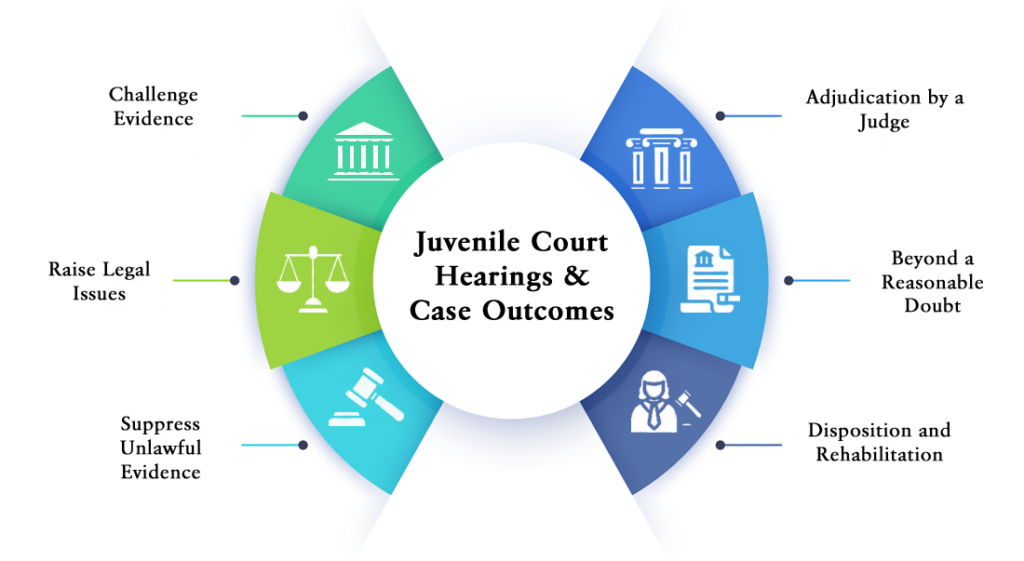
Before an adjudication hearing, a defense attorney may challenge evidence, raise legal issues, and ask the judge to prevent certain evidence from being used against the juvenile. This may include challenging an unlawful search, questioning whether statements were legally obtained, or seeking dismissal when there is a legal basis to do so.
For example, if police search a 15-year-old’s backpack and find drugs, the defense attorney may argue that the search was unlawful and ask the judge to suppress the evidence. If the evidence is excluded, it could significantly weaken the state’s case.
Adjudication Hearing
An adjudication hearing is the juvenile court equivalent of a trial. There is no jury. A juvenile court judge hears testimony, reviews the evidence, and determines whether the state has proven the alleged delinquent act beyond a reasonable doubt.
For example, a juvenile may be accused of starting a fight at school, while witnesses give conflicting accounts and another student says the juvenile acted in self-defense. The judge hears the testimony and considers the evidence before deciding whether the state proved its case.
Disposition Hearing
If the juvenile admits the allegations or the judge finds that the juvenile committed the delinquent act, the case proceeds to disposition. This is similar to sentencing in adult court, although juvenile court places significant emphasis on rehabilitation and the needs of the child.
Depending on the case, the judge may order probation, counseling, community service, restitution, treatment programs, or commitment to the Georgia Department of Juvenile Justice.
For example, a juvenile who admits damaging someone’s property may be ordered to pay restitution, complete community service, attend counseling, and serve a period of probation.
Review and Probation Hearings
The court may schedule additional hearings to determine whether the juvenile is complying with court-ordered conditions and making progress.
For example, a juvenile placed on probation may be required to attend school, complete counseling, obey a curfew, and avoid additional legal trouble. The judge may later hold a review hearing to evaluate the juvenile’s progress and determine whether supervision should continue, be modified, or end.
No matter the circumstances, the best possible outcome is one that leaves the juvenile without a delinquency adjudication or record. There are many ways to challenge the accusations against a juvenile, but preparation is often what makes the difference. When you walk into court knowing more about the facts, the evidence, and the weaknesses in the case than the prosecutor and police, you are in a much stronger position to achieve the best possible outcome.
Court Hearings and Scheduling
Forsyth County Juvenile Court operates in an organized and professional manner, with hearings scheduled at staggered times and conducted privately because minors are involved. The first hearings typically begin at 8:30 a.m. and generally last between 20 minutes and an hour, depending on the complexity of the case and the purpose of the hearing.
Preparing for the First Court Hearing
Zeliff | Watson typically obtains discovery (evidence) before the first hearing and often has an opportunity to discuss the case, the client, and potential outcomes with the prosecutor. These discussions help reduce uncertainty and allow families to better understand what to expect before entering the courtroom.
What Happens During a Juvenile Court Hearing?
Both judges generally prefer that both parents attend, when available. During the hearing, the family and their attorney sit together at a table before the judge. There is also basic paperwork to complete, including information sheets and documents explaining the juvenile’s legal rights. Other individuals present may include court staff, bailiffs, representatives from the Georgia Department of Juvenile Justice (DJJ), and the prosecutor. The DJJ may oversee supervision when the court imposes agreed-upon terms and conditions.
Rehabilitation and Protecting Your Child’s Future
Forsyth County Juvenile Court generally prioritizes rehabilitation over punishment, focusing on helping young people learn from their mistakes, make positive changes, and move forward without unnecessarily jeopardizing their futures.
Location: 875 Lanier 400 Parkway, Cumming, GA
Chief Judge: Christopher Willis
Judge: Heather Dunn
Prosecutor: Assistant District Attorney Marsha Mullen
Schedule a Free Juvenile Defense Case Evaluation
Zeliff | Watson offers free, no-obligation case evaluations for parents whose child has been accused of a juvenile offense in Georgia. During your consultation, you can speak with an experienced juvenile defense attorney, discuss the allegations against your child, and gain a clearer understanding of the juvenile court process and your legal options.
Our attorneys will review the circumstances of your child’s case, discuss potential defenses, and explore opportunities for dismissal, informal adjustment, diversion, or other resolutions that may avoid a delinquency adjudication. We will also answer your questions and explain steps you can take to protect your child’s record, education, driving privileges, and future.
Following the evaluation, we can outline a potential defense strategy and explain the cost of representation. The consultation is completely free, with no obligation to hire us, allowing you to make an informed decision about your child’s next steps.
A Simple Process to Getting Started

Schedule a Free Case Evaluation
Schedule a free, no-obligation, and confidential case consultation in person, online, or over the phone. This will help you understand how your case can be challenged, potentially leading to a reduction, dismissal, or acquittal of your charges. Click here to schedule your case evaluation.

Meet Our Defense Team and Conduct a Case Evaluation
During your free case evaluation, you’ll have the opportunity to ask questions, receive answers and legal guidance, and collaborate with our attorneys to better understand your side of the story, gather evidence, and devise a strategy to achieve the best possible outcome for your pending criminal charges.

Start Defending Your Case
After your free case evaluation, Zeliff & Watson will assist in preserving evidence and safeguarding your rights, ensuring your protection throughout the process. The defense team will also provide a proposed fee to represent your case, with the goal of achieving the best possible outcome.