

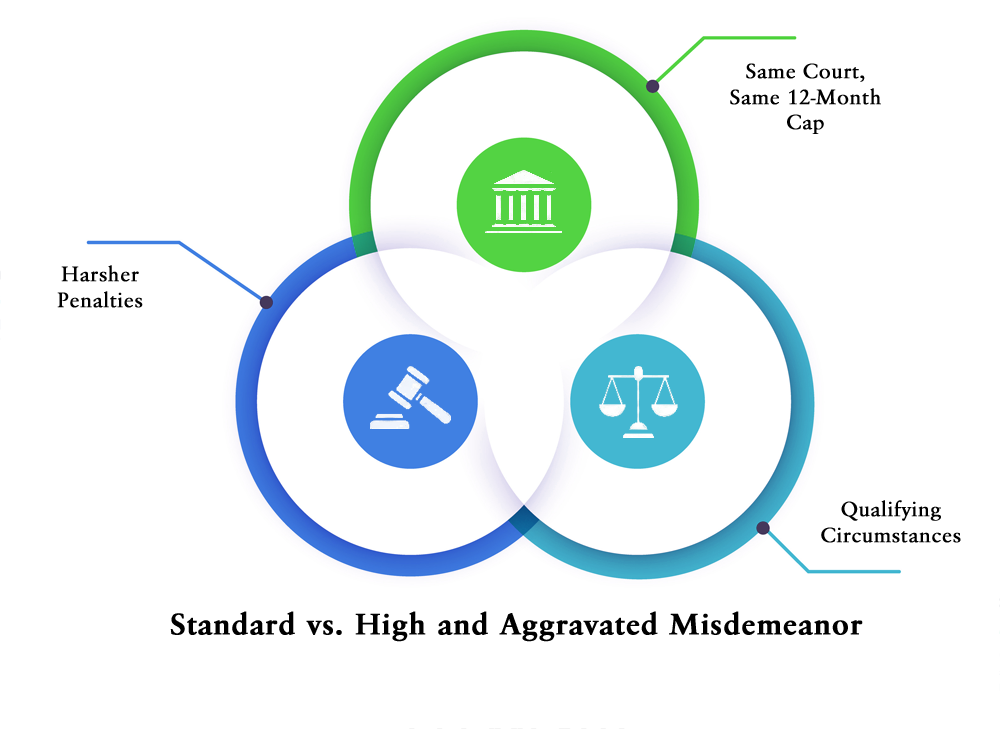
In Georgia, criminal charges are usually split into two main groups: felonies, which carry more than a year in prison, and misdemeanors, which carry up to one year in jail. However, the state uses a special middle-ground category called a high and aggravated misdemeanor for crimes that are more serious than a regular misdemeanor but not quite a felony.
The Difference Between a Standard Misdemeanor and a High and Aggravated Misdemeanor
While both offenses are handled in misdemeanor courts and carry a maximum sentence of 12 months, a high and aggravated misdemeanor is a separate classification under Georgia law. Depending on the circumstances, certain offenses, including repeat offenses, crimes against certain victims, and some crimes that are considered inappropriate even on a first offense, may be charged under this classification. The primary differences are higher financial penalties and legal restrictions that require the accused to serve more of their jail sentence.
Misdemeanor to Felony Ladder
Think of a misdemeanor of a high and aggravated nature as the final warning level before a felony in Georgia. The law often follows a step-by-step ladder where the penalties become more severe each time you are convicted of a similar crime or offense.
High and Aggravated Crimes
Examples of crimes that may be charged as high and aggravated misdemeanors can include:
Assault and Battery Offenses
- Simple assault against a pregnant woman
- Simple assault against a person 65 years of age or older
- Simple assault against a family member or intimate partner (family violence)
- Simple assault against a law enforcement, corrections, or detention officer performing official duties
- Simple assault against a public school employee on school property or while performing official duties
- Simple assault against a sports official officiating an amateur or youth sporting event
- Simple assault against an employee, agent, or volunteer of a licensed long-term care facility
- Simple battery against a pregnant woman
- Simple battery against a person 65 years of age or older
- Simple battery against a family member or intimate partner (family violence)
- Simple battery against a law enforcement, corrections, or detention officer performing official duties
- Simple battery against a public school employee on school property or while performing official duties
- Simple battery against a sports official officiating an amateur or youth sporting event
- Simple battery against an employee, agent, or volunteer of a licensed long-term care facility
- Simple assault or simple battery committed on a public transit vehicle or at a public transit station
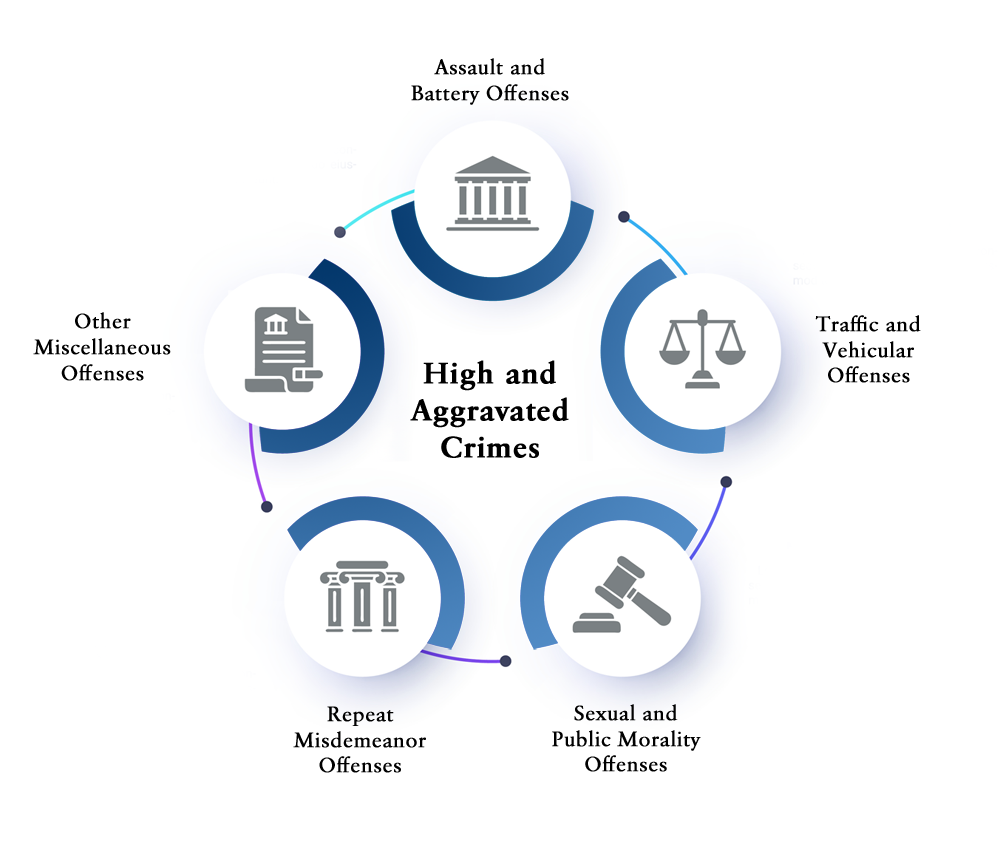
Traffic and Vehicular Offenses
- Aggressive driving
- Fleeing or attempting to elude a police officer (first offense)
- Driving on a suspended or revoked license (second or third conviction within five years)
- Driving under the influence (DUI) (third conviction within 10 years)
Sexual and Public Morality Offenses
- Keeping a place of prostitution (first offense)
- Pimping (first offense)
- Pandering (first offense)
- Masturbation for hire (first offense)
- Sexual battery against an adult (first offense)
- Sale or distribution of harmful materials to minors
Repeat Misdemeanor Offenses
- Criminal trespass (second or subsequent conviction)
- Cruelty to children in the third degree (third or subsequent conviction)
- Stalking (first offense)
Other Miscellaneous Offenses
- Violating a family violence protective order (first offense)
- Pointing or projecting a laser at a law enforcement officer
Fines and Fees
In Georgia, a high and aggravated misdemeanor has a maximum penalty of one year in jail and a $5,000 fine. For regular minor crimes, jails often let people out early for good behavior. For these more serious crimes, state law limits jail credit to only four days a month. This means you must serve at least 26 days of every 30-day sentence. Also, the final cost is much higher than the base fine. Mandatory court fees add 30% to 50% to the bill. This turns a $5,000 fine into a total payment of $6,500 to $7,500.
Collateral Consequences
Beyond jail time and fines, a high and aggravated misdemeanor conviction can create severe indirect consequences that may disrupt your life for years. It establishes a permanent criminal record in Georgia and, in many cases, may not be eligible for record restriction. The conviction is visible to employers and landlords and can significantly limit your employment opportunities, professional licensing, and housing options. If the offense involves domestic violence or certain traffic violations, it may also result in the long-term loss of your firearm rights or a prolonged driver’s license suspension. Additionally, the stigma associated with a high and aggravated misdemeanor conviction can be used against you in future family law matters, such as child custody disputes, and may subject you to harsher penalties if you are charged with another offense.
Challenging the Aggravating Factors
One key defense strategy for protecting yourself against these charges involves your attorney challenging the aggravating factors. This is where your attorney fights to prove that the state cannot legally justify the “high and aggravated” designation. For example, your lawyer may argue that the prosecution cannot prove a prior conviction required to enhance the charge, that the alleged victim does not fall within a protected class, that the incident did not occur under circumstances that qualify for enhanced penalties, or that the evidence simply does not support the aggravating element beyond a reasonable doubt. If the aggravating factor is successfully challenged, the charge may be reduced to a standard misdemeanor, significantly reducing the potential penalties.
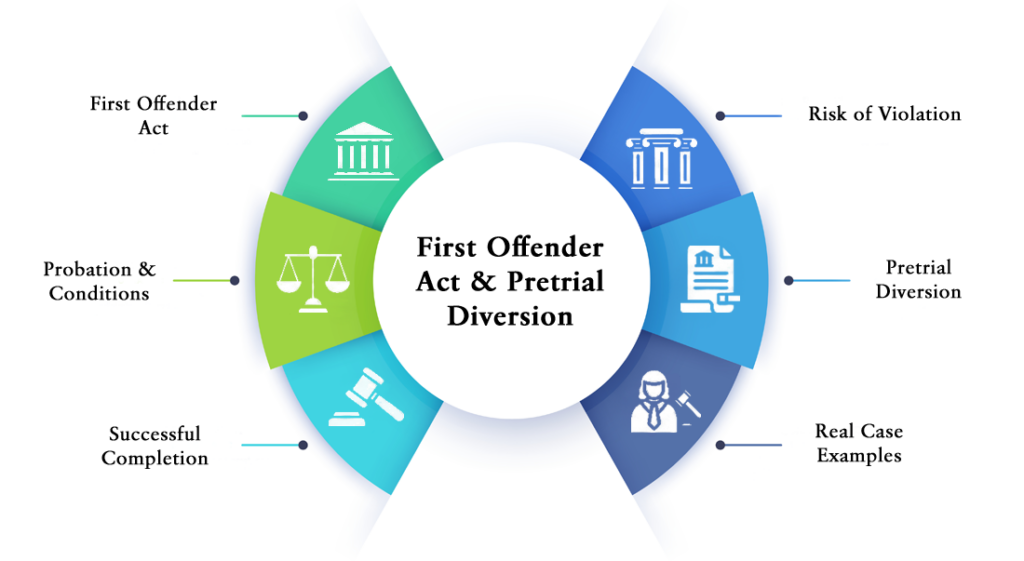
Potentially Using the First Offender Act or Pretrial Diversion as a Defense
Although these options are not available in every case, the First Offender Act and pretrial diversion may help prevent a high and aggravated misdemeanor from resulting in a criminal conviction.
The First Offender Act is a one-time opportunity. You plead guilty, but the judge does not enter a conviction. Instead, the court places you on probation and, in some cases, requires you to serve jail time. If you successfully complete all of the court’s conditions, the case is discharged, and you are not considered convicted of the offense.
However, there is a risk. If you violate the terms of your probation, the judge can revoke your First Offender status and sentence you up to the maximum punishment allowed for the original offense, even if you only have a short time remaining on probation.
For example, a person is charged with a high and aggravated misdemeanor for battery. The judge grants First Offender treatment and orders 12 months of probation, anger management classes, community service, and a fine. The person completes every requirement without violating probation. At the end of the sentence, the case is discharged, and they are not considered convicted of the offense.
Pretrial diversion works differently but has a similar goal. Instead of pleading guilty in court, you enter into an agreement with the prosecutor. The agreement typically requires you to complete certain conditions, such as community service, educational classes, restitution, or a period of supervision. If you successfully complete the program, the prosecutor dismisses the charges before the case goes to trial. Successfully completing pretrial diversion allows the charges to be dismissed and helps you avoid a criminal conviction.
For example, a person is charged with a high and aggravated misdemeanor for shoplifting. Instead of going to trial, the prosecutor offers pretrial diversion. The person completes 40 hours of community service, pays restitution, and attends a theft prevention class. After meeting all of the program’s requirements, the prosecutor dismisses the charge, and no conviction is entered.
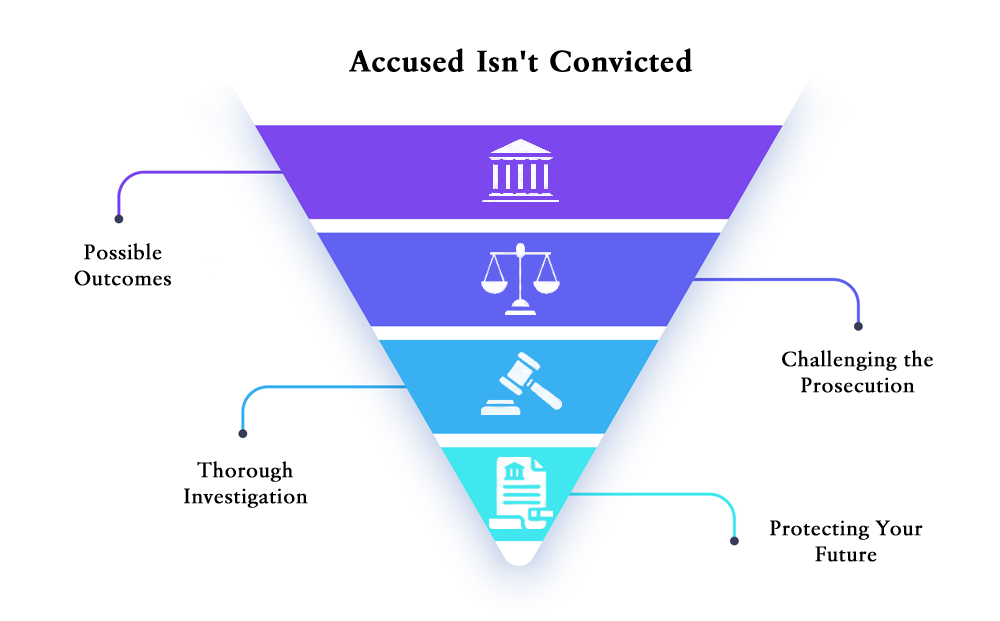
Being Accused Is Not the Same as Being Convicted
Being charged with a high and aggravated misdemeanor does not guarantee a conviction or a permanent criminal record. In fact, many of the high and aggravated misdemeanor cases defended by Zeliff | Watson are resolved through dismissals, reductions to lesser charges, or acquittals at trial.
Every successful defense is built on a foundation of thorough investigation, meticulous preparation, and a relentless commitment to challenging the government’s case.
This process begins with gathering evidence, interviewing witnesses, analyzing police reports, reviewing body camera and surveillance footage, examining laboratory results, and scrutinizing other evidence. Our goal is to uncover inconsistencies, constitutional violations, procedural errors, and other legal defects that can weaken and defeat the prosecution’s case.
At Zeliff | Watson, our mission is to protect your rights, shoulder the stress and uncertainty of the legal process, and pursue the best possible outcome. Whether that means a complete dismissal, a reduced charge, or an acquittal at trial, we fight to help you move forward with your freedom, your reputation, and your future intact.
Schedule a Free Legal Case Evaluation
In Georgia, a high and aggravated misdemeanor can carry serious penalties and lasting consequences. At Zeliff | Watson, we offer free, comprehensive case evaluations so you can fully understand your legal options before making any decisions about your future.
During your consultation, you’ll have the opportunity to discuss the facts of your case, ask questions, and receive straightforward guidance about the defense strategies that may be available. Our attorneys will explain what to expect, identify potential strengths and weaknesses in the State’s case, and help you understand the best path forward.
If you decide to move forward with our firm, we will provide a clear, transparent quote for representation and immediately begin protecting your rights by notifying the court and taking the necessary steps to start building your defense.
Your case evaluation is completely free, confidential, and carries absolutely no obligation to hire our firm.
A Simple Process to Getting Started

Schedule a Free Case Evaluation
Schedule a free, no-obligation, and confidential case consultation in person, online, or over the phone. This will help you understand how your case can be challenged, potentially leading to a reduction, dismissal, or acquittal of your charges. Click here to schedule your case evaluation.

Meet Our Defense Team and Conduct a Case Evaluation
During your free case evaluation, you’ll have the opportunity to ask questions, receive answers and legal guidance, and collaborate with our attorneys to better understand your side of the story, gather evidence, and devise a strategy to achieve the best possible outcome for your pending criminal charges.

Start Defending Your Case
After your free case evaluation, Zeliff & Watson will assist in preserving evidence and safeguarding your rights, ensuring your protection throughout the process. The defense team will also provide a proposed fee to represent your case, with the goal of achieving the best possible outcome.